






Top-Top Info Worldwide is a popular online newsportal and going source for technical and digital content for its influential audience around the globe.

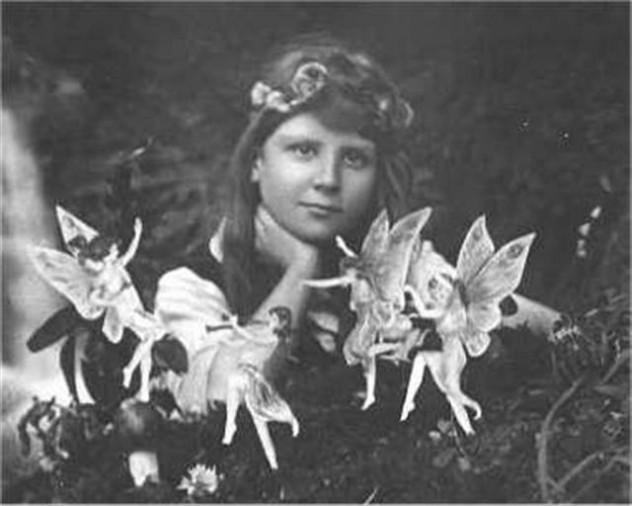
In 1917, the public was captivated by the story of two young girls who claimed to have discovered fairies in their garden. Typically, such a claim from children would not be taken seriously, but these girls had photographic evidence to support their story. Even Arthur Conan Doyle, the renowned author of Sherlock Holmes and a well-known skeptic, found himself intrigued by the pictures. He featured them in his personal magazine, confidently asserting their authenticity—although, as it turned out, they were not. It was only 70 years later that the girls confessed to using cardboard cut-outs and staging the photographs. It is worth noting that Arthur Conan Doyle was the creator of Sherlock Holmes.
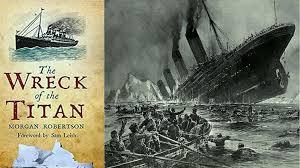
In 1898, Morgan Robertson penned a novel titled "The Wreck of the Titan," which depicted a cruise ship sinking in the North Atlantic after hitting an iceberg. Fourteen years later, the Titanic experienced a similar tragedy, bringing Robertson's fictional story to life.
Charles Scott Robinson, a child rapist from Oklahoma, holds the distinction of receiving the longest prison sentence ever given to an individual for multiple charges. On December 23, 1994, Robinson was convicted on six counts and sentenced to a staggering 30,000 years behind bars, with each count carrying a punishment of 5,000 years.
Fame is difficult to measure across centuries and languages. Sales records are incomplete, translation counts change, and school curricula reflect power as well as literary merit. Rather than claim a definitive top five, this guide introduces five authors whose work changed a form, crossed linguistic borders, or became a durable point of reference for later writers. Each is best approached through an actual text, not a reputation alone.
Shakespeare’s plays have survived partly because they are unusually adaptable. Hamlet, Macbeth, King Lear, and the comedies can be staged in different periods and political settings without losing their central conflicts. His language expanded the expressive possibilities of English drama, but performance—not a list of coined words—is the heart of his influence. Readers new to Shakespeare may find a filmed or live production more revealing than silent study because the plays were constructed for actors, timing, and audiences.
Austen’s six completed novels work within a narrow social field of families, property, courtship, and reputation. That apparent smallness is a source of precision. Free indirect discourse lets narration move close to a character’s assumptions while still exposing their errors. Pride and Prejudice is the popular entry point, but Persuasion offers a quieter study of regret and second chances. The British Library’s surviving manuscripts and editions also show that Austen pursued publication seriously even though her books appeared anonymously during her lifetime.
In War and Peace, Tolstoy moves between households, battlefields, political argument, and private consciousness. The novel questions the idea that history is made only by famous leaders, emphasizing countless decisions and accidents. Anna Karenina uses a more concentrated set of relationships to examine family, desire, work, and social judgment. Tolstoy’s later religious and political essays influenced readers far beyond fiction, including advocates of nonviolent resistance.
Rabindranath Tagore wrote poetry, songs, short stories, novels, plays, and essays, primarily in Bengali. He received the 1913 Nobel Prize in Literature after English versions of poems from Gitanjali brought him a wide international readership. Translation helped his work travel but also shaped how foreign audiences perceived him, sometimes reducing a complex modern writer to a spiritual symbol. Reading his fiction and essays alongside the poetry restores his engagement with education, nationalism, rural life, and cultural exchange.
One Hundred Years of Solitude made García Márquez central to the international recognition of Latin American fiction. The novel’s extraordinary events are narrated with everyday calm, while political violence, family memory, modernization, and repetition give the fantasy historical weight. His journalism and shorter fiction reveal the same attention to power and public storytelling. The Nobel committee recognized the way his fiction joined the fantastic and the real in a world reflecting a continent’s conflicts.
A world-literature list should be an opening, not a border. These five names leave out major traditions in Arabic, Chinese, Japanese, Persian, and many other languages. The practical next step is to read one work, note the translator where relevant, and follow the literary connections outward: influences, contemporaries, critics, and writers who challenged the canon.
Sources: British Library on Shakespeare’s First Folio; British Library on Jane Austen; Encyclopaedia Britannica on Tolstoy; Nobel Prize on Tagore; Nobel Prize on García Márquez.
Stella Artois
Logo first used: 1366
Company founded: 1366
Parent company revenue: $43.2 billion
Industry: Beverage
Top-Top Info Worldwide is a popular online newsportal and going source for technical and digital content for its influential audience around the globe.