







Top-Top Info Worldwide is a popular online newsportal and going source for technical and digital content for its influential audience around the globe.

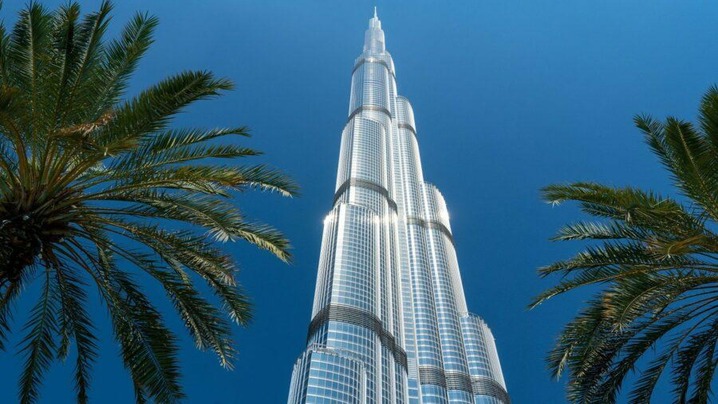
Burj Khalifa is an iconic skyscraper located in Dubai, United Arab Emirates. It is the tallest building in the world, standing at a height of 2,717 feet. The building was designed by the Chicago-based architecture and engineering firm Skidmore, Owings & Merrill, and was completed in 2010.
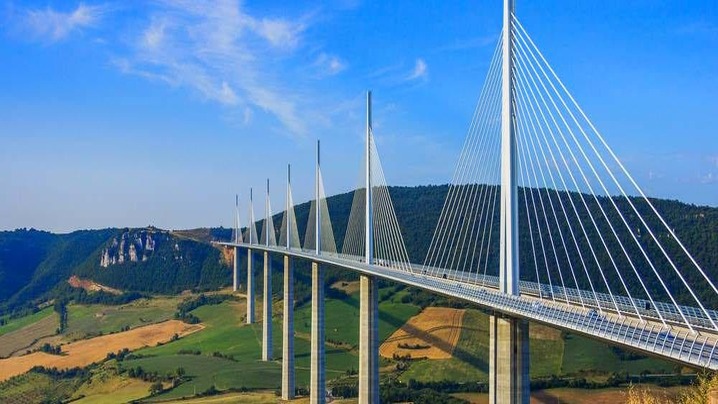
It is a link stayed extension that traverses the crevasse valley of the Tarn close Millau in southern France. In a Franco-British association, it was planned by the English designer Lord Norman Foster and French auxiliary architect Michel Virlogeux.
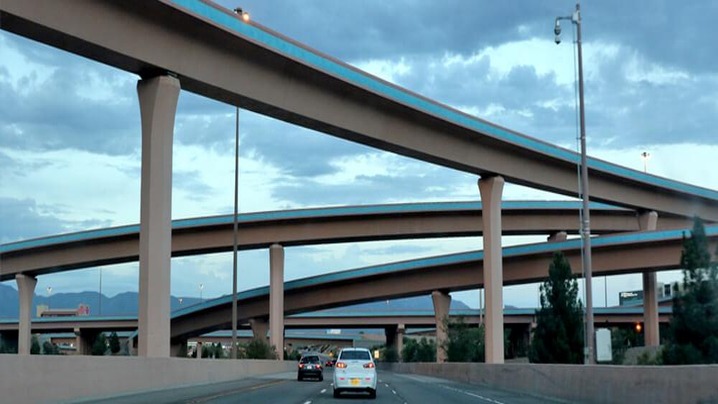
The phrase “world’s widest highway” sounds objective, but it usually compares incompatible measurements. One article may count only through lanes; another includes frontage roads, managed lanes, shoulders, ramps, or a toll plaza that spreads briefly before narrowing. Some measure pavement, others the full right-of-way. Without a shared definition and survey point, a global top-five ranking is not defensible.
A credible comparison states the metric, direction, location, date, and whether parallel roads are included.
Interstate 10 west of central Houston is routinely called the world’s widest freeway. The Federal Highway Administration describes a major reconstruction completed in 2008 on a twelve-mile section. The corridor combines general-purpose lanes, managed lanes, interchange lanes, and frontage roads. Viral counts as high as 26 usually add several of those categories together.
That does not make the road unimpressive, but it changes the claim. A frontage road with signals is operationally different from an uninterrupted freeway lane, and the maximum count may occur only near a complex interchange. The Katy example is most useful as a lesson in corridor design and induced travel demand, not as an uncontested world record.
Ontario’s Highway 401 uses a collector–express arrangement through parts of the Toronto region. Parallel carriageways separate local entering and exiting movements from longer-distance traffic. At broad sections, counting every lane across both directions produces a large total. Yet the design is a network of coordinated roadways rather than one single undivided strip.
Large urban expressways in India are sometimes included in widest-road lists, especially where service roads and interchanges expand the footprint. Again, a point measurement can exaggerate the normal cross-section. Official project documents are more reliable than photographs because lenses and perspective can make a corridor appear broader or narrower.
Images described as a “50-lane highway” in China commonly show traffic spreading across a toll plaza or inspection area. Booth lanes then merge into far fewer travel lanes. A toll fan may be extremely wide pavement, but it is not a continuous 50-lane highway. Treating it as one confuses a traffic-processing facility with the road beyond it.
This monumental avenue is often placed on highway lists, although it is an urban boulevard with intersections, transit infrastructure, and adjoining streets rather than a controlled-access highway. Its inclusion demonstrates how quickly “widest road,” “widest avenue,” and “widest freeway” become interchangeable online even though transport engineers distinguish them.
Road capacity depends on bottlenecks, merging, incidents, lane management, vehicle occupancy, and connections at each end. Widening can initially increase capacity, but easier driving may encourage additional trips, longer trips, or development patterns that add traffic. Large rights-of-way also divide neighborhoods, increase runoff and heat, and require substantial land and maintenance.
A better question than “Which highway wins?” is “What job does this corridor perform, and at what cost?” Useful comparisons include people moved per hour, travel-time reliability, safety, access, emissions, land consumption, and integration with transit.
Sources: Federal Highway Administration: Katy Freeway; Texas Department of Transportation Roadway Design Manual; Government of Ontario: Highway 401; Federal Highway Administration: Traffic Trends.
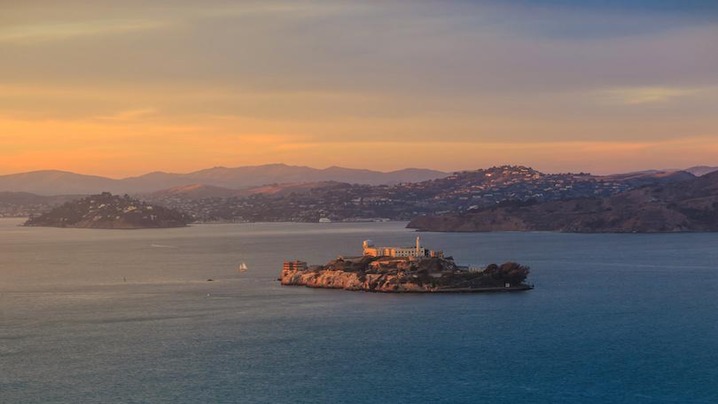
Historic prisons attract visitors because architecture can make systems of power tangible. Cells, walls, labor yards, and surveillance plans show how states defined crime, discipline, race, class, and political dissent. But these places are not merely “notorious” attractions. Many contain histories of abuse, resistance, wrongful imprisonment, and death. A responsible survey centers the people confined there and asks what the institution was designed to accomplish.
Alcatraz served as a fort, military prison, and federal penitentiary before becoming part of the National Park Service. Its history also includes the 1969–1971 occupation by Indians of All Tribes, a major event in the modern Indigenous rights movement. That layered story is more important than its roster of famous prisoners.
Used for isolation and imprisonment across several eras, Robben Island became internationally associated with apartheid and political prisoners, including Nelson Mandela. Former prisoners helped shape its museum. UNESCO recognizes the island as testimony to oppression and the triumph of democracy and freedom.
Opened in Philadelphia in 1829, Eastern State embodied the “separate system,” which sought penitence through isolation. Its radial plan influenced prison design internationally. The site now examines mass incarceration and the gap between reform claims and the psychological consequences of solitary confinement.
Kilmainham held ordinary prisoners and political detainees under British rule. Executions following the 1916 Easter Rising made it central to Irish national memory. Interpretation also addresses harsh nineteenth-century conditions, poverty, and the imprisonment of women and children.
Part of the Australian Convict Sites World Heritage property, Port Arthur was a penal settlement within the British transportation system. Its ruins and records illuminate forced labor, punishment, attempted reform, and the colonial displacement of Aboriginal peoples.
Built by British colonial authorities in the Andaman Islands, the Cellular Jail confined independence activists and other prisoners in isolated cells. Its design enabled surveillance and separation. Remembering it requires attention to colonial violence, hunger strikes, forced labor, and contested national memory.
French colonial authorities built Hoa Lo in Hanoi to hold Vietnamese prisoners, including anti-colonial activists. During the Vietnam War, it also held American prisoners of war. Exhibitions and popular accounts emphasize different periods, making comparison of archival evidence and perspectives especially important.
The Khmer Rouge converted a Phnom Penh school into Security Prison 21, a detention, interrogation, and torture center. Most prisoners were killed. The museum preserves photographs and documents that support education and accountability. Visitors should approach it as a memorial to victims, not as dark entertainment.
The Tower was a fortress, royal residence, treasury, armory, and place of imprisonment over many centuries. Famous elite prisoners dominate popular memory, but its carceral use was only one part of a larger state complex. Its changing functions caution against labeling every fortified site simply a prison.
France’s penal-colony system in Guiana dispersed prisoners across multiple sites; “Devil’s Island” is often used inaccurately for the whole system. Disease, forced labor, isolation, and administrative brutality shaped confinement. The history is better understood through the system’s records than through escape legends alone.
Preserved prisons matter when they help the public examine institutions, not when they turn suffering into atmosphere. Their walls are evidence; interpretation determines whether that evidence enlightens or exploits.
Sources: National Park Service: Alcatraz; UNESCO: Robben Island; Eastern State Penitentiary Historic Site; UNESCO: Australian Convict Sites.
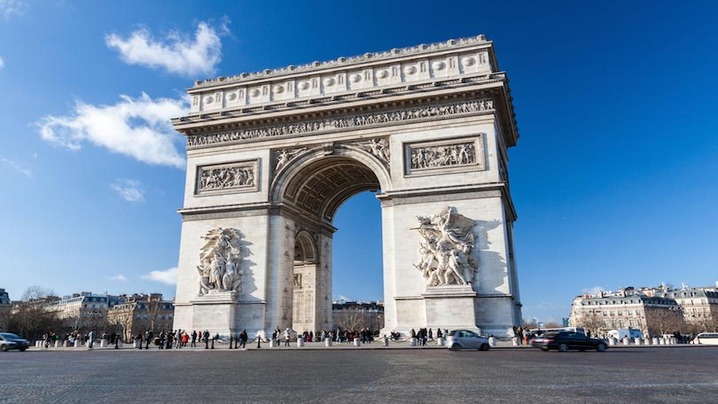
A triumphal arch is never just a decorative gateway. Roman rulers used arches to frame movement, display inscriptions, and connect military victory with political authority. Later states borrowed the form for national memory, imperial identity, independence, and urban spectacle. Rather than ranking them by size or beauty, this guide asks what each monument was designed to communicate.
Erected after Titus’s death, this single-bay arch commemorates the Roman victory in the Jewish War. Reliefs include soldiers carrying sacred objects taken from the Jerusalem Temple. The monument is therefore both a major work of Roman art and evidence of conquest, destruction, and forced celebration.
This three-bay arch in the Roman Forum honored victories in campaigns against Parthia. Its inscription was altered after Geta, the emperor’s son and co-ruler, was murdered and officially condemned. The erased name reveals how monuments could be edited when political memory changed.
Dedicated in the fourth century, the arch reused reliefs from earlier imperial monuments. That reuse linked Constantine with admired predecessors while new panels promoted his own victory. It is a vivid lesson in how governments repurpose older imagery to legitimize new rule.
This Roman arch in southern France has multiple passageways and sculpted military imagery. Its exact original dedication has been debated, while later repairs and alterations complicate interpretation. Survival over centuries does not mean a monument reached the present unchanged.
Napoleon ordered the project in 1806 after Austerlitz, but it was completed in 1836 under a different political order. Names and sculptures connect it to Revolutionary and Napoleonic armies. The later Tomb of the Unknown Soldier and memorial flame expanded its meaning from imperial victory to national mourning.
Built as a principal entrance for the 1888 Barcelona Universal Exposition, this red-brick arch adopted the triumphal form for civic display rather than a battlefield victory. Its material, ornament, and setting distinguish it from the stone monuments that inspired the type.
Originally conceived as an entrance to Buckingham Palace’s precinct and later associated with victory over Napoleon, Wellington Arch moved to a new position in the nineteenth century. Its changing location and sculpture show that monuments are often revised to meet new traffic, planning, and commemorative needs.
Designed by Edwin Lutyens, India Gate commemorated soldiers of the British Indian Army who died in war. After independence, the setting acquired additional national meanings. It should be read within both colonial military history and India’s evolving practices of remembrance.
This structure began as part of an unfinished legislative palace under Porfirio Díaz. After the Mexican Revolution, the surviving iron and stone framework was transformed into a monument and mausoleum. Its history turns an abandoned state project into a symbol claimed by a new political narrative.
Laos’s Patuxai uses the broad outline of a triumphal arch while incorporating Lao decorative forms. Built in the twentieth century, it commemorates national struggle and independence. Its hybrid design demonstrates how an imported monument type can be localized.
Triumphal arches remain powerful because they turn history into a path people physically pass through. Their grandeur is real, but so are the political choices embedded in their stone.
Sources: Centre des monuments nationaux; Rome cultural heritage authority; UNESCO: Via Appia; Imperial War Museums.
Top-Top Info Worldwide is a popular online newsportal and going source for technical and digital content for its influential audience around the globe.