








Top-Top Info Worldwide is a popular online newsportal and going source for technical and digital content for its influential audience around the globe.


Denmark has been announced as the world’s cleanest country according to the 2022 Environmental Performance Index (EPI). The Danish government has been praised for its efforts in creating a sustainable future, with a focus on renewable energy and reducing carbon emissions.
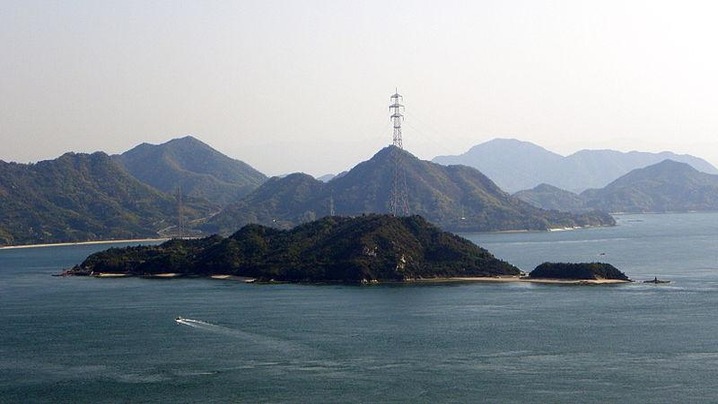
Three kilometers off the coast of Japan, Okunoshima Island is overrun with rabbits, which are not a native species. But there are no human residents on Okunoshima Island. It was once the site of a chemical weapons plant, turning out poison gas for the Japanese Imperial Army from 1929 to 1945.

Claims about the “world’s smallest town” usually compare unlike things. One place may legally be a city despite having few residents; another may be an unincorporated settlement; a third may have a tiny historic center inside a much larger municipality. Population changes, census dates differ, and national definitions of town are not equivalent. These five places are better treated as case studies than as a countdown.
Statistical agencies increasingly use population density, contiguous settlement, and administrative boundaries to make comparisons. Eurostat’s degree-of-urbanisation method, endorsed for international comparison, classifies territory using one-square-kilometer population cells and local administrative units. Legal titles still remain country-specific. A royal charter, municipal incorporation, or tourism slogan may say little about current size.
Hum is frequently promoted as one of the world’s smallest towns. Its medieval fabric, gate, church, stone houses, and Glagolitic heritage make it a compelling destination. Administratively, however, population counts may refer to the settlement, while services and government connect it to the wider City of Buzet. The honest claim is that Hum is an exceptionally small historic urban settlement, not a scientifically certified global winner.
Durbuy’s compact old center is often advertised as a tiny city. The modern municipality, however, contains multiple villages and covers a much larger area than the postcard view suggests. Its city title reflects history and legal tradition. Comparing the old center’s apparent footprint with another municipality’s full boundary produces a misleading ranking.
Adamstown is the principal settlement and administrative center of the Pitcairn Islands, a British Overseas Territory in the Pacific. The territory’s population is extremely small and remote. Calling Adamstown a capital, village, or settlement depends on context, but its isolation creates practical realities more important than a record: limited transport, reliance on local infrastructure, and careful management of visitors and supplies.
Monowi became famous after census reporting showed a population of one. It is an incorporated village, which makes its legal continuity as notable as its population. Counts can change between census products and dates, and the personal life of its resident should not be treated as a novelty attraction. Travelers should respect private property and verify whether any business is open.
Buford has also been marketed as an extremely small town, especially when a single resident lived there. It is better understood as an unincorporated locality and commercial site near Interstate 80 than as a directly comparable municipality. Ownership changes and promotional branding show how easily a population fact becomes a durable internet label after circumstances have changed.
Vatican City is the world’s smallest independent state by area, but a sovereign state is not the same category as a town. Monaco is another small sovereign state with a dense urban environment. Including either in a town ranking changes the question rather than answering it.
Tiny communities are worth visiting and studying without forcing them into a false global league table. Their real stories concern continuity, governance, heritage, access, and how residents sustain community life at a small scale.
Sources: Eurostat methodology; U.S. Census Bureau; Government of the Pitcairn Islands; City of Buzet.

There is no single authoritative global table that identifies the ten safest airports. Accident counts alone are misleading because airports handle very different traffic volumes, aircraft types, weather and terrain. A small airport may report no serious events simply because it has few flights, while a large hub may identify more incidents because it has stronger reporting systems. Passenger comfort and security screening are also distinct from operational aviation safety.
Regulators assess risk through multiple layers: infrastructure standards, air traffic procedures, wildlife control, emergency capability, staff training and a safety-management process that looks for hazards before they cause an accident. These ten signals provide a better way to understand an airport's safety posture.
Passengers cannot audit an airport from the departure hall, but they can look for oversight by recognized civil-aviation authorities and read regulator safety reports. News stories about a single event should be placed in context: determine whether the event was an accident, serious incident or lower-severity occurrence and whether corrective action followed. Airport marketing awards usually measure service, cleanliness or customer satisfaction, not operational risk.
The airline, aircraft operator, air navigation service and airport share responsibility for a flight. A beautifully designed terminal says little about runway safety, while an older terminal can serve an airport with rigorous operations. Security—the prevention of unlawful acts—also uses different data and agencies from accident prevention.
A credible comparison should normalize events by exposure, distinguish severity, use several years of data and disclose its definitions. Without that work, a numerical ranking offers false precision. The safer conclusion is that aviation safety comes from overlapping defenses and continuous improvement, not from a permanent badge attached to one airport.
Sources: FAA: Airport Safety Management Systems; FAA: Runway incursions; FAA: Runway risk mitigation; EASA: Annual Safety Review 2025; ICAO: Global Runway Safety Action Plan.

Iberostar Selection Cancún is a luxurious five-star resort that offers an array of amenities and activities to guests.
Top-Top Info Worldwide is a popular online newsportal and going source for technical and digital content for its influential audience around the globe.