








Top-Top Info Worldwide is a popular online newsportal and going source for technical and digital content for its influential audience around the globe.

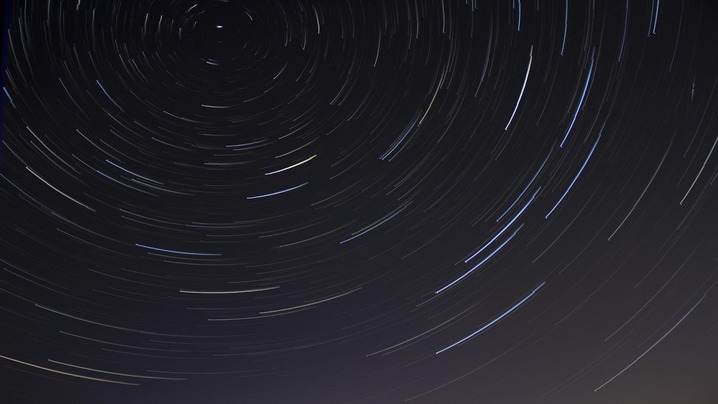
The cosmos continually beckons with its vast, enigmatic expanse, occasionally sending bewildering messages in the form of mysterious signals from space. These signals, ranging from the enigmatic Wow! Signals to the perplexing Fast Radio Bursts (FRBs), have puzzled astronomers and sparked a myriad of scientific investigations and speculative theories. This article delves into the top 5 mysterious signals from space, exploring their discoveries, the ongoing research to unravel their origins, and the fascinating possibilities they suggest about the universe and potential extraterrestrial communication.
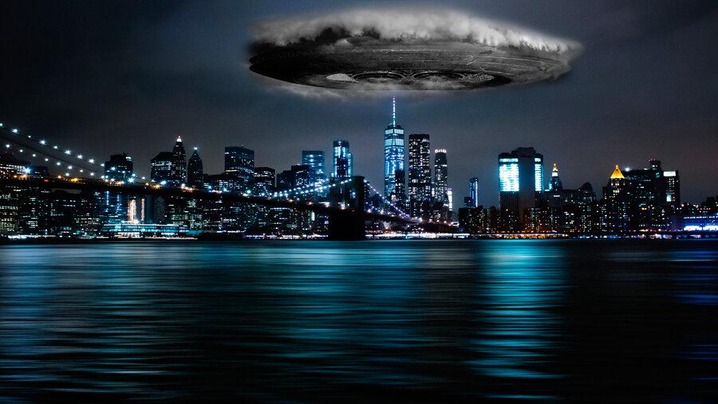
“Unidentified” describes the state of an investigation, not the origin of an object. A report may remain unresolved because a sensor captured too little data, records are missing, or several ordinary explanations fit equally well. That is different from evidence of extraterrestrial technology. The history of UFO—now often called unidentified anomalous phenomena, or UAP—investigation is most useful when it shows how evidence improves or fails.
The U.S. Air Force began formally collecting reports in 1947 through Project Sign, followed by Project Grudge and Project Blue Book. Blue Book closed in 1969 after recording 12,618 reports, of which 701 remained unidentified. The Air Force concluded that investigated reports showed no national-security threat, no technology beyond then-current scientific knowledge, and no evidence of extraterrestrial vehicles. The unresolved cases did not overturn those conclusions; they lacked enough information for a confident identification.
In July 1952, radar operators and observers reported unusual activity near Washington, D.C. The events became famous because they occurred around the national capital and generated intense press coverage. Contemporary explanations focused on temperature inversions, radar propagation effects, and ordinary aircraft, though not every observation was reconstructed conclusively. The episode demonstrates a recurring problem: clusters of attention can produce more reports, while radar returns without complete weather, calibration, and flight data remain difficult to interpret decades later.
The University of Colorado study commissioned by the Air Force examined UFO reports in the 1960s. Its conclusions were controversial among believers and some participating researchers, but the study helped frame a lasting question: can continued investigation produce scientific knowledge without standardized, high-quality observations? The National Academy of Sciences reviewed the report, and the Air Force cited it when ending Blue Book. Whatever one thinks of individual cases, reproducible data and testable hypotheses remain essential.
In the late 2010s, public discussion accelerated after reports by military aviators and the release of short infrared videos. The Department of Defense later formally released three Navy videos, noting that the objects in them remained categorized as unidentified. The footage is real military imagery, but authenticity of a recording is not the same as confirmation of extraordinary performance. Camera geometry, sensor behavior, range, wind, and movement of the observing platform can radically affect apparent motion.
NASA’s 2023 independent study did not evaluate every historical sighting. It asked how scientific methods and better data collection could improve UAP research. The report emphasized calibrated sensors, metadata, open analysis, and reducing stigma around reporting. The Pentagon’s All-domain Anomaly Resolution Office has separately reviewed government records and current reports. Its 2024 historical report said it found no verified evidence that the U.S. government or private industry possessed extraterrestrial technology, while acknowledging that some cases remain unresolved.
A responsible reader should ask what sensors were involved, whether original data survive, whether independent observers agree, and which mundane hypotheses have been tested. It is reasonable to remain curious. It is not reasonable to treat every information gap as proof of a preferred explanation. Better reporting may identify more drones, balloons, satellites, aircraft, and atmospheric effects—and may leave a smaller set of genuinely puzzling observations worthy of further study.
Sources: U.S. National Archives on Project Blue Book; NASA UAP independent study; Department of Defense release of Navy videos; AARO reports and congressional products.
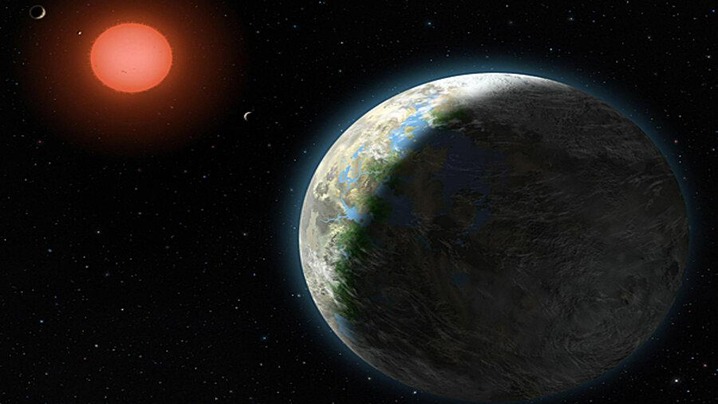
The first planets humans knew all orbit one star and fit a limited set of types. Exoplanet surveys shattered that local perspective. Astronomers now confirm worlds through transits, stellar motion, direct imaging and other methods, then infer properties from mass, radius, orbit and spectra. Popular descriptions such as glass rain or lava ocean are useful images, but they may combine measurements with models. The ten worlds below are selected for the questions they raise, not ranked by weirdness.
For most exoplanets, no telescope resolves a surface. Artist illustrations translate data into a scene, but colors, clouds and landscapes may be speculative. A measured transit can provide radius; radial velocity can constrain mass; combining them yields average density. Spectra can identify molecules or atoms in an atmosphere, yet temperature structure and clouds may allow several interpretations.
The NASA Exoplanet Archive tracks confirmed planets and links parameters to published research. Its count changes as new objects are added and occasional candidates are reclassified. That living catalog is more useful than a static list because science improves through revision.
The real surprise is diversity. Planet formation can produce inflated giants, compact multi-planet systems, scorched rocks, circumbinary orbits and worlds detached from stars. Each unusual case tests a model that must also explain our own Solar System. Calling them extraordinary should invite questions, not turn tentative findings into fantasy facts.
Sources: NASA Exoplanet Archive; NASA Science: 55 Cancri e; NASA Science: WASP-12 b; NASA Science: Exoplanet questions; NASA Astrobiology: Rogue planets.

Located in Tanzania, some might not believe when we say that this lake traps all animals that lurk within the area.
Calling a place “mystical” can mean several different things: it may be sacred to a living community, associated with pilgrimage, shaped by legends, or simply difficult for modern visitors to interpret. Those meanings deserve care. A responsible guide separates archaeological evidence from later stories and treats sacred landscapes as more than dramatic backdrops.
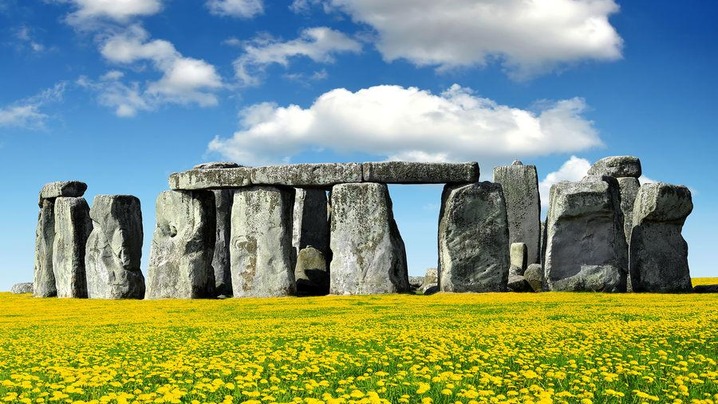
Built and altered over many centuries in the Neolithic and Bronze Age, Stonehenge belongs to a wider landscape of avenues, settlements, and burial monuments. Its alignment with seasonal solar events is real, but no single theory fully explains every phase or purpose. Archaeologists examine it as a ceremonial and mortuary complex, not a solved astronomical machine.
This Inca site joins architecture, terraces, water management, and mountain geography at the meeting of the Andes and Amazon Basin. Its precise role is still debated, with interpretations including royal estate and ceremonial center. It is not a “lost city” untouched by history; local communities knew the landscape before international publicity transformed it into a global destination.
Uluru is part of a living cultural landscape for Aṉangu, its Traditional Owners. Stories, law, routes, and responsibilities connect people to the land. Visitors should follow current guidance, stay on permitted paths, and respect restrictions on photography and access. The decision to close the climb reflects custodianship, safety, and culture.
Thousands of surviving monuments and archaeological remains form a Buddhist sacred landscape. Temples, stupas, monasteries, art, inscriptions, and continuing practices record the power and devotion of the Bagan period. Its significance is not reducible to the number of picturesque towers visible at sunrise.
Trails link Yoshino and Omine, Kumano Sanzan, and Koyasan through forested mountains. UNESCO describes the landscape as reflecting a long interaction between Shinto traditions of nature worship and Buddhism. These are living pilgrimage routes as well as heritage sites, so quiet conduct and local rules matter.
The Nabataeans created a city of rock-cut facades, temples, tombs, and sophisticated water systems at a crossroads of Arabian trade. Petra’s dramatic approach through the Siq encourages legends, but archaeology reveals practical engineering and cultural exchange alongside ritual life.
Angkor was the center of the Khmer Empire and contains temples, reservoirs, canals, roads, and settlements across a vast landscape. Angkor Wat is only one component. Research into water management and urban form has replaced the image of an isolated monument with that of a complex inhabited region.
The moai were created by Polynesian communities whose descendants continue to live on Rapa Nui. Archaeology studies carving, transport, platforms, and changing land use, while oral traditions preserve cultural knowledge. Visitors should avoid framing the statues as an achievement requiring unknown outsiders.
Stone enclosures and settlement remains testify to a major African trading and political center. Colonial writers once denied local authorship, a claim rejected by archaeology. Its history is therefore also a lesson in how prejudice can manufacture a false mystery.
This mountain and surrounding landscape are associated with sacred mountain worship, shamanic and Buddhist practices, and traditions concerning Chinggis Khan. Its relative isolation is part of its cultural meaning. A visitor’s desire for access should not override restrictions that protect worship and ecology.
These places are compelling because human meaning, environmental setting, and material history overlap. Understanding what is known—and whose knowledge counts—makes them more interesting, not less.
Sources: UNESCO: Stonehenge; UNESCO: Machu Picchu; UNESCO: Kii Mountains; UNESCO: Bagan; UNESCO: Burkhan Khaldun.
Top-Top Info Worldwide is a popular online newsportal and going source for technical and digital content for its influential audience around the globe.