







Top-Top Info Worldwide is a popular online newsportal and going source for technical and digital content for its influential audience around the globe.

The Apple Inc. has founded by Steven Paul Jobs and others back in 1976 which is headquartered in Cupertino, CA. The tech giant designs produce and sells world’s best selling mobiles and PCs. In addition, it also markets a wide range of related software, networking solutions, third-party digital content, and peripherals.
A technology brand may have a headquarters in one country, engineers in several others, components from dozens of suppliers, final assembly in another location, and corporate ownership somewhere else again. Describing such a product as “not manufactured in its homeland” assumes that a brand has one natural manufacturing home. Modern electronics rarely fit that model.
The better approach is to identify which part of the product story matters: design, fabrication, assembly, ownership, or legal origin. Those are distinct facts, and each may change between models or production years.
Many consumer-electronics companies define the product, software, specifications, and quality requirements while specialized manufacturing-services firms perform assembly. An assembler may build devices for several competing brands. This is not necessarily “fake” manufacturing; it is a contractual division of labor. The brand company remains responsible for supplier standards and for claims it makes to customers.
A semiconductor can be designed by one company using specialized software, fabricated in a foundry in another economy, packaged and tested elsewhere, and finally installed in a device assembled somewhere else. The OECD notes that semiconductor production can involve more than a thousand processes and a highly concentrated network of equipment, chemical, design, and fabrication suppliers.
Some suppliers do more than follow a brand’s blueprint. An original design manufacturer may engineer a platform that multiple brands customize with different cases, software, features, or marketing. Two products with different logos can therefore share important internal architecture without being identical.
A familiar brand can outlive the company that originally built its products. Trademark rights may be sold or licensed by category and region. A television, appliance, or audio product carrying an old European, American, or Japanese name may be designed and produced under license by an unrelated company. The current trademark owner and licensee matter more than nostalgia.
The same model family may be assembled in several countries for different markets. Components, labeling, radio hardware, plugs, warranty terms, and regulatory certifications can vary. A statement about one unit cannot safely be generalized to every product sold under the brand.
Country-of-origin markings are governed by customs rules, not by a universal measure of where most intellectual effort or economic value originated. Final substantial transformation may determine the label in one jurisdiction, while other rules apply elsewhere. The label can be accurate and still omit the global path of major components.
Headquarters also tells only one story. A parent company may own the trademark; a subsidiary may sell the device; outside suppliers may manufacture it; and software may be developed across distributed teams. Treating any one of those as the complete nationality of the product creates confusion.
Consumers may care about labor conditions, environmental impact, repairability, security, sanctions, tariffs, or local employment. None can be answered by a brand’s national image alone. Responsible purchasing requires model-level evidence and attention to the whole chain, including minerals, components, logistics, assembly, and end-of-life handling.
A global supply chain is not automatically good or bad. It can spread expertise and lower costs while also obscuring accountability and concentrating critical production. Accurate language is the first step: say who designed, owned, fabricated, assembled, or licensed the product, and cite the date and evidence.
Sources: OECD: Semiconductor value chains; OECD: Due diligence in electronics manufacturing; WTO: Global Value Chain Development Report; Apple Supplier Responsibility.
As we stride further into the 21st century, the horizon of technological advancements expands with an unprecedented pace and ingenuity. From quantum computing that promises to revolutionize data processing to biotechnologies that could extend human life expectancy, the future looks not just promising but also radically different from our present.
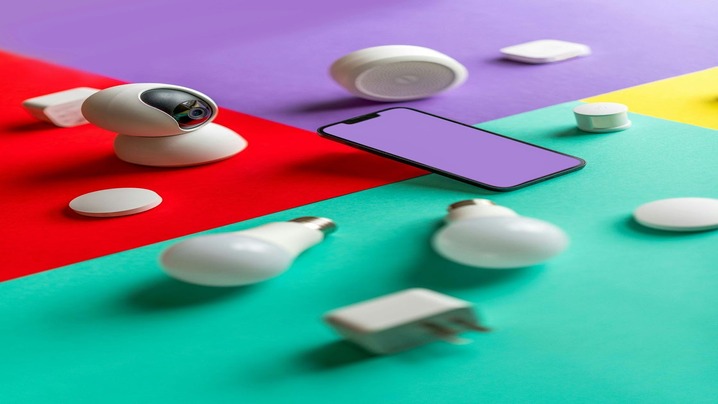
In the ever-evolving landscape of technology, the Internet of Things (IoT) and smart devices have carved a niche that transcends mere convenience to become an integral part of our daily routines. From smart home technology to connected devices that streamline business operations, the IoT revolution is reshaping the way we interact with the world around us. This article delves into the top 10 IoT and smart devices that are setting the trend in IoT technology trends and making our lives smarter and more connected.
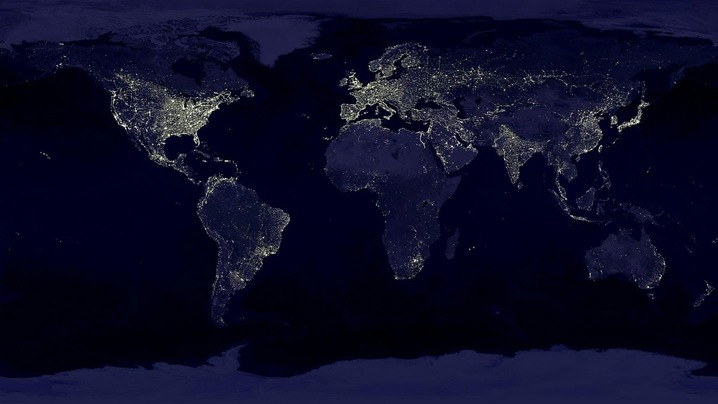
In the realm of international business, a few corporate giants stand out for their global impact, innovative practices, and financial prowess. These multinational corporations (MNCs) not only dominate their respective industries but also contribute significantly to the world economy. Here's a look at the top 10 MNCs that are leading the charge in the global marketplace.
Top-Top Info Worldwide is a popular online newsportal and going source for technical and digital content for its influential audience around the globe.