








Top-Top Info Worldwide is a popular online newsportal and going source for technical and digital content for its influential audience around the globe.

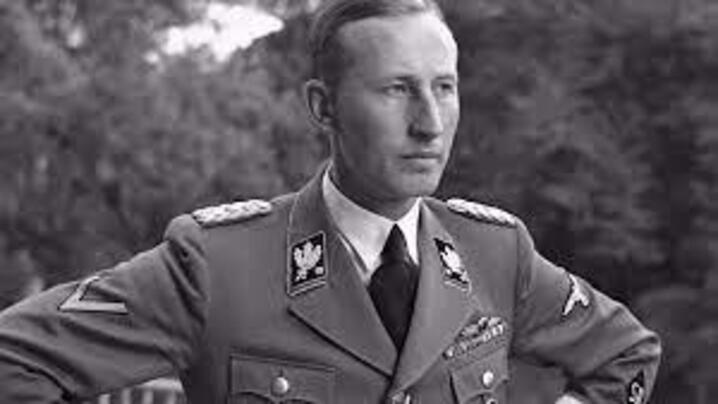
82 years ago, on June 4, 1942, Reinhard Heydrich, the head of Nazi security police and governor of the Protectorate of Bohemia and Moravia, was killed by Czech parachutists in an assassination attempt. This event was a significant moment in Czech resistance and dealt a major blow to the Nazi war effort, as it showed that even high-ranking German officials were not invincible.

A terrible Maniac on the world Chikatilo was known as The Rostov Ripper and the Butcher of Rostov due to the fact that most of his murders were committed in the Rostov Oblast of the Russian SFSR.

Bagration came from a long line of Georgian royalty known as the Bagrations, who ruled over Georgia for nearly 900 years. Peter's ancestors included many monarchs and influential statesmen. However, there is limited information available about Bagration's early life.

Dolly Parton’s career offers more than a collection of inspirational lines. Her recorded work, business choices, public persona, and literacy philanthropy show how creative identity can be sustained over decades. The lessons below are interpretations of documented actions, not claims that she spoke these exact words.
Parton’s songs often begin with concrete Appalachian places, family memories, clothing, work, and social judgment. Precise detail makes emotion credible; it does not prevent a broad audience from recognizing itself.
Songwriting credits and publishing rights can outlast a single performance. Creators should understand contracts, ownership, licensing, and the long-term value of their catalog before a moment of leverage arrives.
A useful partnership can expand an audience without requiring permanent dependence. Parton’s career shows repeated movement among collaborators, labels, genres, film, television, and live entertainment while retaining a recognizable center.
Her heightened visual style is deliberate and consistent. A distinctive persona works when it is flexible enough for the person behind it to age, experiment, and speak seriously without appearing to abandon the brand.
Self-aware humor can answer criticism without surrendering dignity. It also creates room to discuss ambition, class, appearance, and stereotypes on terms set by the speaker.
Celebrity can obscure technical skill. Returning attention to melody, narrative structure, vocal interpretation, and prolific writing helps explain why the career endured.
Parton has worked across country, pop, bluegrass, gospel, film music, and rock. Productive reinvention acknowledges collaborators and traditions instead of treating a new genre as a costume.
The Imagination Library began in Sevier County, Tennessee, and was inspired in part by her father’s inability to read. The program translated a family experience into a repeatable community model.
Participating children receive books regardless of family income. Universal access avoids forcing parents to prove hardship and frames reading as a shared opportunity rather than charity reserved for a labeled group.
One donated book is helpful; a book mailed every month from birth to age five creates routine. Programs become durable when delivery is simple, predictable, and locally supported.
Local affiliates help fund and enroll children, while the central organization manages book selection and fulfillment. That division lets a clear idea adapt to different communities and countries.
Book totals are visible and motivating, but the deeper goal is regular exposure to reading. Strong programs celebrate distribution while continuing to study participation, reach, and outcomes.
The Library of Congress added “Coat of Many Colors” to the National Recording Registry for its cultural, historical, or aesthetic significance. Preservation turns popular entertainment into an accessible historical record.
A long career is not one uninterrupted peak. It requires adjusting formats, audiences, touring, media, and business structures while deciding which values should remain stable.
Public service is more credible when attached to a concrete mechanism people can examine and join. The institution matters more than a heroic image of the founder.
If a supposed Parton quotation has no interview, recording, book, or official transcript behind it, present it as unverified. Admiration does not improve weak provenance.
Sources: Dolly Parton’s Imagination Library; The Dollywood Foundation; Library of Congress: National Recording Registry; Library of Congress: Dolly Parton collection.
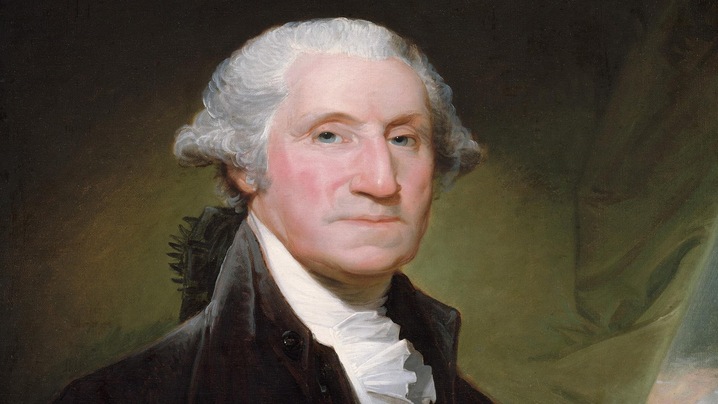
George Washington left an enormous documentary record: military orders, farm correspondence, presidential papers, private letters, speeches, and a will. That abundance makes him easy to quote and easy to misquote. A sentence detached from its recipient and date can sound like a timeless slogan even when it answered a specific political crisis. The most useful way to encounter Washington’s words is therefore by theme, with the original document close at hand.
Washington treated character as something built through repeated conduct. His youthful copying of the “Rules of Civility” was not a collection of original sayings, but it shows an early interest in restraint, courtesy, and self-command.
At the end of the Revolutionary War, Washington resigned his commission to Congress. The act mattered as much as any sentence: military power was returned to the civil government instead of becoming a personal possession.
In his Farewell Address, Washington argued that regional loyalties could make the young republic vulnerable. Read in context, his concern was not uniformity; it was whether states with different interests could preserve a shared constitutional system.
Washington worried that organized factions might place victory over public responsibility. His warning is often simplified into hostility toward all disagreement, but the document focuses on the danger of durable parties capturing government for narrow ends.
Letters and presidential messages repeatedly connect national strength with paying debts and administering finances credibly. For Washington, independence required institutions capable of keeping commitments.
His correspondence with American religious communities described conscience as a right rather than a favor granted by a majority. These letters are best read alongside the Constitution’s prohibition on religious tests and the First Amendment.
Washington advocated a national university and broader access to useful knowledge. He believed citizens and officials needed enough understanding to resist sectional prejudice and govern a large republic.
At Mount Vernon he tracked crops, soils, tools, weather, and livestock. The records reveal curiosity and adaptation, but also the brutal foundation of plantation production: the labor of enslaved people.
Washington defended liberty while enslaving more than one hundred people personally and controlling many others through the Custis estate. His will provided for the emancipation of people he owned after Martha Washington’s death, a significant but delayed and limited act that did not erase decades of exploitation.
His military correspondence shows attention to reconnaissance, secrecy, logistics, and misinformation. Victory depended on information systems as well as battlefield courage.
Cabinet papers reveal Washington soliciting competing arguments from figures such as Alexander Hamilton and Thomas Jefferson. Consensus was not assumed; decisions often followed structured conflict.
By leaving office after two terms, Washington established a precedent rather than a legal rule. The choice helped define the presidency as a temporary public trust.
Before sharing a quotation, search a reliable edition for distinctive words, open the complete document, and verify date, recipient, and editorial notes. If no primary record appears, label the attribution uncertain rather than upgrading repetition into evidence.
Sources: Founders Online, National Archives; Library of Congress: George Washington Papers; National Archives: Papers of George Washington; Mount Vernon: Washington and slavery.
Top-Top Info Worldwide is a popular online newsportal and going source for technical and digital content for its influential audience around the globe.