





Top-Top Info Worldwide is a popular online newsportal and going source for technical and digital content for its influential audience around the globe.


Famous “fortune tellers” are often ranked by how many events they supposedly predicted. That method is unreliable. Predictions may be vague, translated loosely, written down after the event, or selected from a much larger number of failures. A historical approach asks what the original source says, when it was recorded, and how later communities interpreted it.
The Pythia was not one individual but the title of Apollo’s priestess at Delphi in ancient Greece. People and city-states consulted the oracle on religious and political questions. Surviving accounts were written by different authors, sometimes long after the reported consultation. Responses are often remembered as riddles whose meaning became clear only after an outcome. Delphi’s importance is historical and religious; modern claims of measurable predictive accuracy impose a test the ancient evidence cannot support.
Michel de Nostredame, known as Nostradamus, published collections of poetic quatrains beginning in the sixteenth century. The verses use symbolic language, historical references, and few clear dates. Readers repeatedly connect them to wars, rulers, disasters, and assassinations after those events occur. Because translations and word choices vary, interpreters can produce striking matches while overlooking passages that fit nothing. His lasting influence is a story about print culture and interpretation, not proof of supernatural foresight.
Ursula Southeil, called Mother Shipton, became a legendary English prophetess. Stories place her in sixteenth-century Yorkshire, but many famous verses attributed to her appeared in print much later. One nineteenth-century publisher admitted composing a prominent prophecy. Her case demonstrates how folklore can accumulate around a plausible historical core until invented text is treated as ancient testimony.
Vangeliya Gushterova, widely known as Baba Vanga, was a Bulgarian spiritual figure who died in 1996. She became famous through visitors’ stories and later media. The most dramatic annual prediction lists circulating online generally lack dated, contemporaneous transcripts. Academic research on her modern image shows how journalists, political actors, and social media users can alter or invent statements while borrowing her authority. That does not erase her cultural significance to believers; it means individual claims require a traceable source.
American astrologer Jeane Dixon became a media celebrity through newspaper columns and books. Her reputation grew around a small number of apparent successes, while incompatible or failed predictions received less attention. Mathematician John Allen Paulos later used the “Jeane Dixon effect” as a label for remembering a few seeming hits and forgetting many misses. The pattern is a familiar form of selection bias.
Human beings are excellent pattern finders. Hindsight makes ambiguous language feel specific, and repetition can make a recent invention feel ancient. Translation, editing, and oral transmission add further uncertainty.
These five traditions remain worth studying because they reveal how societies think about uncertainty, authority, fate, and crisis. Their stories can be appreciated as religion, folklore, literature, and media history without presenting unverifiable predictions as established fact.
Sources: UNESCO on Delphi; Library of Congress fortune-telling subject record; Cambridge study of Baba Vanga’s mediated image; Encyclopaedia Britannica on Nostradamus.
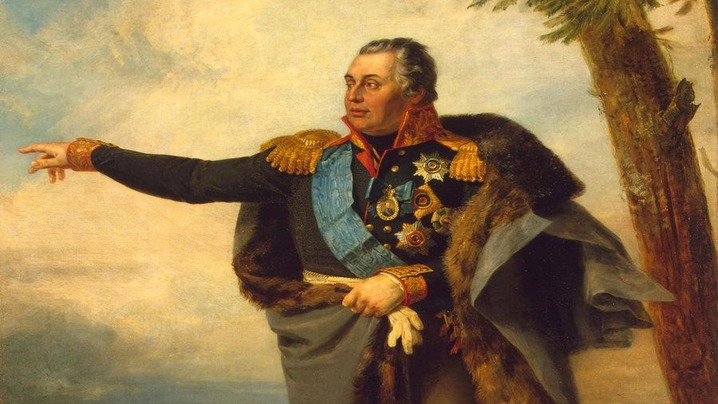
The men commonly called false tsars were not merely eccentric impostors. Their claims became dangerous because they appeared during crises when succession, legitimacy, war, and social grievance had weakened confidence in the state. Whether subjects literally believed each story is only part of the question. A pretender could serve as a banner under which nobles, foreign powers, Cossacks, peasants, and townspeople pursued different goals.
Ivan IV’s son Dmitry died as a child in Uglich in 1591. When Tsar Fyodor I died without an heir in 1598, the centuries-old Rurik dynasty ended and Boris Godunov became tsar. Famine from 1601 to 1603, elite rivalry, and uncertainty about the child’s death created fertile ground for a claimant who said he had survived.
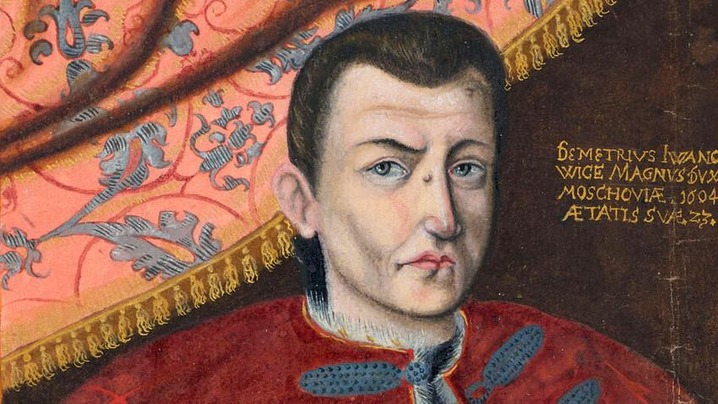
The first False Dmitry appeared in the Polish-Lithuanian Commonwealth and gathered support among magnates and others who saw advantage in his campaign. He entered Russia in 1604. Boris Godunov’s sudden death the next year transformed the contest: Dmitry reached Moscow and was crowned. His reign lasted less than a year. Opposition among boyars, hostility toward his Polish connections, and tension surrounding his marriage to Marina Mniszech culminated in an uprising and his killing in 1606.
His brief success reveals that royal identity was political as well as biological. Recognition by armies, elites, church figures, and urban crowds could temporarily make a disputed story function as government.
A second claimant emerged in 1607 and was accepted by Marina as her supposedly surviving husband. Unlike the first, he never securely ruled from the Kremlin. He established a rival center at Tushino near Moscow, complete with administrators and supporters. For a time, Russia effectively had competing courts claiming authority.
His coalition joined dissatisfied Russian factions with Polish-Lithuanian forces, but its members did not share one objective. Allegiance shifted as military conditions and negotiations changed. The Tushino camp weakened, the claimant fled, and he was killed in 1610. The episode shows how a royal name could coordinate a movement without producing a stable state.
More than a century later, the Don Cossack Emelian Pugachev claimed to be Emperor Peter III, who had been deposed and killed in 1762. Beginning in 1773, his rebellion drew support from Cossacks, peasants, factory workers, and some non-Russian communities across the Volga and Ural regions.
The claim did more than disguise Pugachev’s identity. It supplied a familiar language of legitimate rule: a “true” sovereign could be imagined as freeing subjects from abusive officials, landlords, taxation, and service obligations. The movement captured towns and threatened important centers before imperial forces defeated it. Pugachev was taken to Moscow and executed in 1775.
“Pretender” describes a claim rejected by the regime and most later historians; it should not make the social conflict disappear. The central historical question is not how gullible people were. It is why a particular identity could make rebellion, intervention, or elite defection seem legitimate at a particular moment.
Sources: Library of Congress: Russia, a Country Study; Boris Yeltsin Presidential Library: Pugachev collection item; Encyclopaedia Britannica: Time of Troubles; Encyclopaedia Britannica: Yemelyan Pugachov.
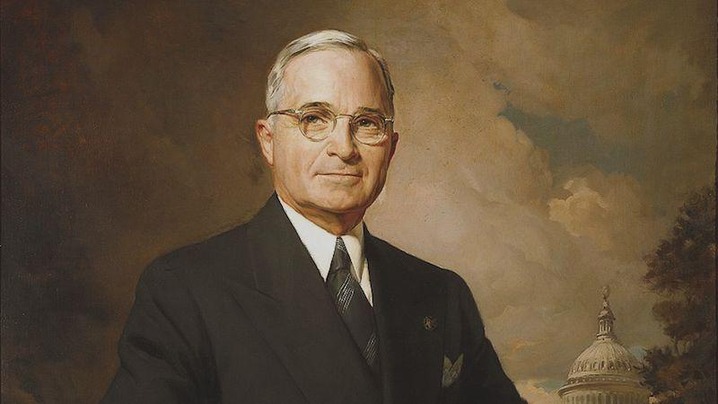
Lists of the “poorest presidents” often present precise modern net-worth figures for people who lived before modern accounting, income taxes, or consistent financial disclosure. Those numbers can create false certainty. Land, enslaved labor, inherited claims, business debts, and political patronage do not translate cleanly into a present-day balance sheet. A sounder approach is to examine documented periods of financial strain and ask who bore the cost.
Jefferson owned extensive land and valuable property, so describing him simply as poor is misleading. He was also deeply indebted. Monticello records trace liabilities inherited through marriage, heavy spending, agricultural losses, a guaranteed loan for a friend, and falling land values. At his death in 1826, the estate owed about $107,000. The consequences were not confined to his family: the sale used to satisfy creditors included more than one hundred enslaved people, separating families. His case shows why asset ownership and financial security are not the same—and why a president’s finances must be discussed together with the coerced labor supporting them.
Lincoln grew up in a farming family with limited resources and had little formal schooling. As a young man in New Salem, Illinois, he entered a store partnership that failed, leaving debts that followed him for years. He later built a successful legal and political career. Lincoln was not destitute as president, but his early experience illustrates upward mobility in a nineteenth-century economy where failed credit arrangements could burden an individual long after a business closed.
Grant experienced financial difficulty before the Civil War, achieved security through military fame and the presidency, and then lost nearly everything in 1884. He had invested in Grant & Ward, a brokerage associated with his son and Ferdinand Ward. The firm collapsed after Ward’s fraud was exposed. Ill with throat cancer, Grant wrote his memoirs to provide for his family. Mark Twain’s publishing arrangement produced exceptionally large royalties for Grant’s widow after his death. This is one of the clearest documented cases of a former president facing financial ruin.
During the financial panic of 1893, while governor of Ohio, McKinley faced obligations after endorsing notes for a friend whose business failed. Supporters organized a trusteeship and raised money to satisfy the claims. McKinley and his wife placed property under trustees’ control, and unused contributions were reportedly returned. The episode mattered politically because opponents could portray private indebtedness as poor judgment, while supporters framed it as excessive loyalty to a friend.
Truman returned to Independence, Missouri, after leaving office in 1953. He had an Army pension and later income from writing and other sources, but former presidents then received no federal pension, staff, office allowance, or Secret Service protection as a standard package. Stories that he was literally impoverished are often exaggerated. His circumstances nonetheless helped focus attention on the costs imposed on former presidents. Congress passed the Former Presidents Act in 1958, creating a pension and support framework.
These examples cannot be ranked honestly without defining the date, measuring assets and debts consistently, and accounting for inflation and illiquid property. “Poorest” also obscures moral differences: a debtor who owned people was not economically situated like a young laborer with no property. The reliable conclusion is narrower: several presidents faced serious financial strain, but viral net-worth tables usually claim more precision than the historical record supports.
Sources: Monticello on Jefferson’s debt; National Park Service on Lincoln; National Park Service on Grant & Ward; Library of Congress McKinley papers; Congressional Research Service on former presidents.

Ancient Egypt had powerful queens, regents and women who adopted the full titles and imagery of kingship, but those categories are not interchangeable. Evidence is incomplete, names can appear in different forms, and later writers sometimes compressed complicated successions. A responsible account therefore distinguishes securely attested female kings from influential royal women whose precise status remains debated.
Merneith of the First Dynasty held exceptional authority and may have acted as regent for Den. Her large tomb and association with royal monuments show importance, but scholars differ over whether she should be counted as a reigning king. Khentkaus I of the Fourth Dynasty is another difficult case: her unusual title has been translated in more than one way, producing competing interpretations about whether she ruled or was the mother of kings.
Nitocris illustrates a different problem. Her story appears in later historical traditions, yet contemporary archaeological confirmation is lacking; some researchers think her name arose from a mistaken reading of a male king's name. Nefertiti was unquestionably powerful and prominent in Amarna art, but whether she became Neferneferuaten remains unresolved. Arsinoe II and Berenice II exercised major dynastic and religious influence in the Ptolemaic period, but influence alone does not make either a sole female pharaoh.
Researchers weigh royal titulary, cartouches, dated inscriptions, king lists, tombs, statuary and administrative documents. Visual appearance must be interpreted carefully: Egyptian royal art communicated office and cosmic order, not a modern portrait of everyday identity. Hatshepsut's use of traditional masculine regalia, for example, asserted kingship while some inscriptions retained feminine grammatical forms.
These women are best understood within Egypt's political institutions, not as novelties competing for prestige. Their reigns reveal that kingship was strongly gendered yet adaptable when dynasty, succession and elite support created an opening. A defensible list contains fewer than ten certain cases—and that uncertainty is part of the history rather than a gap to fill with speculation.
Sources: Metropolitan Museum of Art: Hatshepsut; Met object record: Hatshepsut; British Museum: African Kingdoms timeline; UCL Digital Egypt chronology.
Top-Top Info Worldwide is a popular online newsportal and going source for technical and digital content for its influential audience around the globe.