




Top-Top Info Worldwide is a popular online newsportal and going source for technical and digital content for its influential audience around the globe.

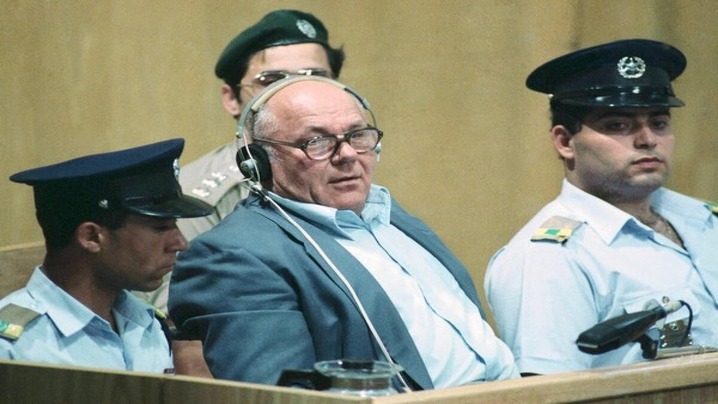
Lists of Nazi suspects described as “still at large” age badly. A person’s status may change through death, discovery, trial, acquittal, extradition, or a finding that the available evidence cannot support prosecution. Because nearly all people old enough to have participated directly in Nazi crimes are now dead, the responsible question is no longer which names belong in a dramatic countdown. It is how perpetrators escaped, how investigators found them, and what justice achieved even when it came late.
The International Military Tribunal at Nuremberg prosecuted 22 major surviving leaders, and Allied and national courts tried thousands of additional defendants. Yet the Nazi system depended on far more than a small circle of leaders. Officials, guards, police units, military personnel, collaborators, transport staff, administrators, and private actors helped carry out persecution and mass murder across Europe.
Postwar disruption made investigation difficult. Records were destroyed or dispersed, witnesses were displaced, borders changed, and suspects adopted new identities. Some fled through international escape networks. Others remained in their home countries and resumed ordinary careers. As Cold War priorities hardened, political interest in prosecution declined. The U.S. Holocaust Memorial Museum notes that many convicted perpetrators were released in the 1950s and thousands were never brought to justice.
Public attention revived around major proceedings such as Israel’s 1961 trial of Adolf Eichmann and the Frankfurt Auschwitz trials of 1963–1965. Researchers, survivors, journalists, and private investigators—including Simon Wiesenthal and Beate and Serge Klarsfeld—kept cases visible and helped locate suspects. Their work did not substitute for courts, but it often prompted governments to reopen files.
In the United States, the Department of Justice established the Office of Special Investigations in 1979. American courts generally could not prosecute wartime crimes committed in Europe directly, so investigators focused on immigration fraud: whether entrants had concealed participation in persecution. Remedies included denaturalization and removal. The OSI later became part of the Justice Department’s Human Rights and Special Prosecutions Section.
Josef Mengele, the Auschwitz physician long sought in South America, was never tried. A multinational investigation concluded in the 1980s that he had died in Brazil in 1979, illustrating how a famous fugitive could evade accountability until death. Adolf Eichmann, by contrast, was captured in Argentina, tried in Israel with extensive witness testimony, convicted, and executed in 1962.
John Demjanjuk’s case shows why status labels require care. U.S. proceedings first centered on the mistaken claim that he was “Ivan the Terrible” of Treblinka; Israel’s Supreme Court overturned his conviction when new evidence created reasonable doubt about that identity. Later evidence connected him to service at Sobibor. A German court convicted him in 2011 as an accessory to murder, but he died while the appeal was pending, so the conviction did not become final under German law.
Late cases increasingly focused on service at killing centers rather than proof that a defendant personally committed a particular murder. German prosecutions following the Demjanjuk case argued that knowingly serving within the machinery of a death camp could establish accessory liability. Courts still had to examine identity, role, evidence, health, and procedural rights individually.
Age does not erase responsibility, but a fair prosecution must still prove a legally defined offense against a particular defendant. Trials can establish facts, preserve testimony, reject denial, and recognize victims. They cannot repair every loss, and the small number of late convictions underscores the scale of postwar failure.
The enduring lesson is institutional. Mass crimes generate enormous documentary and human evidence, but evidence matters only when governments preserve it, share it, protect witnesses, and sustain lawful investigations. The “hunt” was never a single chase after a few notorious men; it was a decades-long struggle to make individual accountability possible after state-organized atrocity.
Sources: U.S. Holocaust Memorial Museum: Search for Perpetrators; USHMM: War Crimes Trials; U.S. Justice Department: Human Rights and Special Prosecutions; USHMM: Nuremberg Tribunal.
“Worst king” lists compress complicated societies into personality contests. Monarchs ruled through courts, armies, religious institutions, tax systems, and local elites; responsibility was rarely theirs alone. Even so, rulers can be judged for choices that intensified war, repression, exploitation, or institutional collapse. The nine examples below are not a definitive ranking. They are cases that show different kinds of destructive rule.
John lost much of the English crown’s territory in France, fought with leading barons, and imposed heavy financial demands. Rebellion forced him to accept Magna Carta in 1215. The charter did not create modern democracy, but its survival reflects a central problem of John’s reign: subjects with power no longer trusted royal government to restrain itself.
Edward II’s dependence on favorites, conflict with nobles, and defeat at Bannockburn weakened his authority. His deposition in 1327 illustrates how a medieval king could fail when patronage and military leadership no longer held an elite coalition together.
Richard II survived the Peasants’ Revolt but later used royal power to punish opponents and concentrate control. Henry Bolingbroke removed him in 1399. Historians debate whether Richard was a visionary monarch or a vindictive one, which is precisely why a simple ranking is inadequate.
Henry VI inherited two kingdoms as an infant and later experienced periods of severe illness. Court faction, losses in France, and rival claims helped produce the Wars of the Roses. His case cautions against treating medical incapacity as moral failure while still recognizing the disastrous weakness of government during his reign.
Charles I’s conflicts with Parliament over taxation, religion, and the limits of royal power culminated in civil wars across the three kingdoms. After defeat, he was tried and executed in 1649. The UK Parliament’s own history presents the trial as a clash between rival claims of lawful authority, not a cartoon of a uniquely evil king.
China’s first emperor standardized writing, currency, measures, roads, and administration after conquest. He is also associated with harsh legalist rule, forced labor, expansionist campaigns, and suppression of texts. His legacy combines state-building achievements with enormous human costs.
Nero’s reign included political killings, revolt, fiscal strain, and persecution, but many famous stories were written by hostile elite authors after his death. He belongs in this discussion because the evidence is contested: responsible history distinguishes documented policies from later rumor.
Leopold II was a king, but the Congo Free State was his personal possession rather than an ordinary Belgian colony until 1908. Its extractive system relied on coercion, hostage-taking, mutilation, and lethal violence. This case demonstrates why a ruler’s reputation must include harms inflicted beyond Europe.
Joseon king Gwanghaegun was deposed and long portrayed as a tyrant. Later historians have given more weight to his diplomacy and postwar reconstruction. Including him exposes a recurring problem: victorious factions often shape the first version of a deposed ruler’s reputation.
Sources: British Library catalogue: Magna Carta; UK Parliament: trial of Charles I; UK Parliament: revolution and civil war; Metropolitan Museum: Qin dynasty; Encyclopaedia Britannica: Leopold II.

The oldest university in the world is held by Nalanda University which you can see is what remains of it. Its existence showed the strength of Indian culture which emphasizes education long ago.
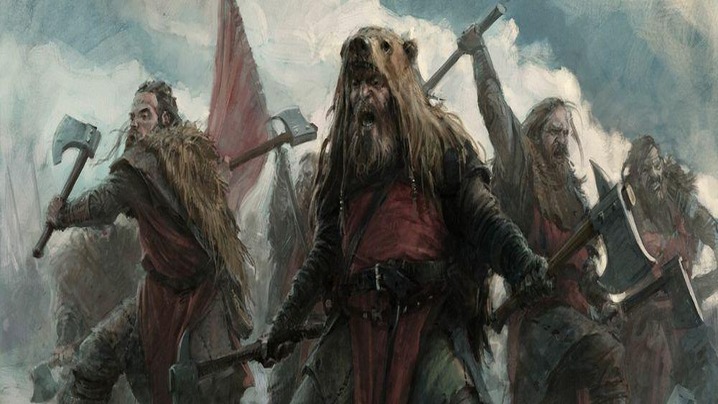
Ragnar Lothbrok is perhaps one of the most legendary Viking kings in history. While there is some debate among historians about the historical accuracy of his existence, his story has become the stuff of legends.
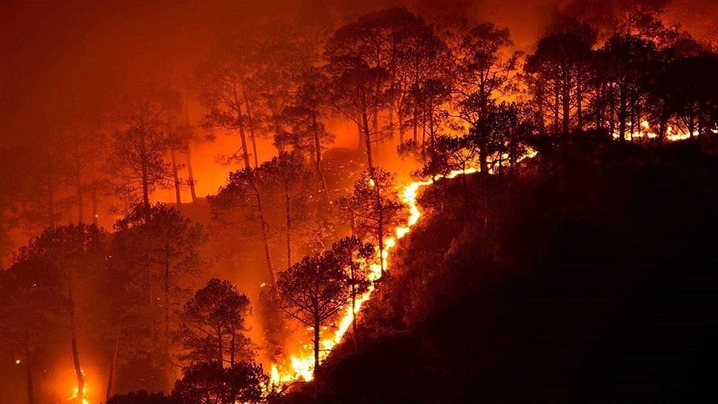
A list of the “largest wildfires ever” sounds straightforward, but the underlying data are not. A fire can be counted as one incident, a complex of merged incidents, or an entire regional season. Agencies may report forest loss, total burned land, or mapped perimeter. Older events were estimated from incomplete records, while modern satellites detect remote burning that earlier observers missed. Rankings that mix these categories create false precision.
A more accurate comparison begins by defining the unit. Burned area measures extent, not necessarily intensity, deaths, ecological damage, or structures destroyed. A vast fire in a sparsely populated boreal region may burn more land than a smaller urban-edge fire that causes far greater loss of life and property.
Satellite products use different sensors, spatial resolution, and rules for classifying burned land. Cloud cover and smoke can obscure observations. Ground agencies update perimeters as crews map incidents, and fire complexes may be renamed or combined. News reports published during an emergency therefore should not be treated as final measurements.
Climate and land management also shape the record. Heat, drought, wind, fuel conditions, and ignition determine whether a fire grows. Human activity causes many ignitions, while climate change can increase the prevalence of hot, dry conditions that favor extreme fire behavior. At the same time, fire is a natural and culturally managed ecological process in many landscapes. Treating every burn as identical damage overlooks prescribed fire and Indigenous cultural burning.
The most consequential fire may not be the one with the largest footprint. Smoke contains fine particles and gases that can affect communities hundreds or thousands of kilometers away. Exposure can worsen respiratory and cardiovascular conditions, with children, older adults, pregnant people, outdoor workers, and people with existing illness facing elevated risks. Evacuation, housing loss, disrupted livelihoods, and mental-health effects can continue after flames are contained.
Before repeating a record, ask four questions: Is the figure for one fire or a season? Does it include grassland and prescribed burning? Which agency or satellite product measured it? Is the number final? A qualified statement—such as “largest mapped in the EU record”—is more trustworthy than an unexplained claim of “largest in history.”
The honest conclusion is not a permanent top-ten chart. It is that wildfire scale must be compared within compatible datasets, while risk should be judged through lives, health, ecosystems, infrastructure, and recovery as well as hectares.
Sources: National Interagency Fire Center statistics; Copernicus wildfire analysis; World Health Organization wildfire fact sheet; NASA Earth Observatory wildfires.
Top-Top Info Worldwide is a popular online newsportal and going source for technical and digital content for its influential audience around the globe.