








Top-Top Info Worldwide is a popular online newsportal and going source for technical and digital content for its influential audience around the globe.

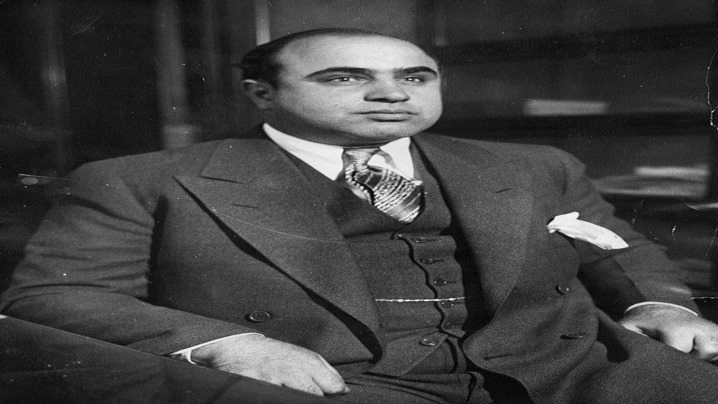
Popular culture often turns organized-crime leaders into colorful antiheroes and ranks them by wealth, violence, or notoriety. That framing hides the people harmed by extortion, trafficking, corruption, intimidation, and murder. It also blurs important distinctions: “Mafia” may refer specifically to Sicily’s Cosa Nostra, to Italian American La Cosa Nostra, or loosely—and often inaccurately—to unrelated criminal groups.
A more useful history asks how criminal organizations acquired durable power. Their strength did not come from one charismatic boss. It came from networks that could enforce silence, settle illicit disputes, infiltrate legitimate markets, corrupt officials, and convert violence into predictable income.
In the United States, La Cosa Nostra developed geographically organized “families.” Leadership labels such as boss, underboss, consigliere, captain, soldier, and associate described relationships, but real authority could be fluid. Members relied on secrecy and the threat of retaliation. Associates who were not formally inducted could still participate in gambling, loansharking, labor racketeering, fraud, theft, narcotics distribution, and money laundering.
Prohibition created opportunities for criminal groups, but repeal did not end organized crime. Enterprises shifted among illegal markets and used control over unions or businesses to extract payments. The FBI’s history emphasizes that American Mafia groups changed over time as different gangs and families gained or lost influence.
Al Capone remains associated with Chicago’s Prohibition-era violence, but his 1931 federal conviction was for tax evasion. Charles “Lucky” Luciano is linked to the reorganization of Italian American crime in New York and the creation of a coordinating Commission. These cases show two recurring themes: leaders insulated themselves from street offenses, and prosecutors sometimes used financial or conspiracy charges when direct evidence of violence was difficult to obtain.
Later bosses faced a different enforcement environment. John Gotti cultivated public visibility, but surveillance, wiretaps, informants, and testimony from former associate Salvatore Gravano supported the federal case that led to Gotti’s 1992 convictions. The prosecution was not simply the fall of a celebrity gangster; it demonstrated how evidence about an enterprise could connect leadership to crimes carried out through subordinates.
The Racketeer Influenced and Corrupt Organizations provisions of the Organized Crime Control Act of 1970 allowed prosecutors to address a continuing criminal enterprise through a pattern of specified offenses. Rather than treating every act as an isolated case, investigators could present the relationships among leaders, crews, rackets, and repeated crimes.
The 1980s Commission Case used this approach against leaders of New York’s five major La Cosa Nostra families. Undercover work also mattered. FBI agent Joseph Pistone spent years inside circles connected to the Bonanno family under the name Donnie Brasco, gathering evidence and revealing practices that had been shielded by secrecy. International cooperation later became essential in cases involving drug routes, money flows, and groups operating across borders.
Mob power was experienced by victims as constrained choices: a business owner paying to avoid damage, a worker losing honest representation, a witness afraid to testify, or a community institution distorted by corruption. Violence was not merely internal theater between gangsters. It enforced markets and silence, while illegal proceeds could undermine lawful competitors and public trust.
Organized crime has not vanished. Its methods evolve with finance, communications, migration, and enforcement pressure. But history shows that these organizations are not invincible. Financial analysis, witness protection, lawful electronic surveillance, undercover operations, enterprise prosecutions, and cooperation among jurisdictions can reduce their ability to operate.
The most accurate way to study Mafia history is therefore not to celebrate a top ten. It is to understand the systems that made coercion profitable, the investigative tools that exposed those systems, and the continuing need to focus on victims rather than criminal mythology.
Sources: FBI: History of La Cosa Nostra; FBI Organized Crime Major Cases; FBI: John Gotti; U.S. Justice Department: RICO Charges.
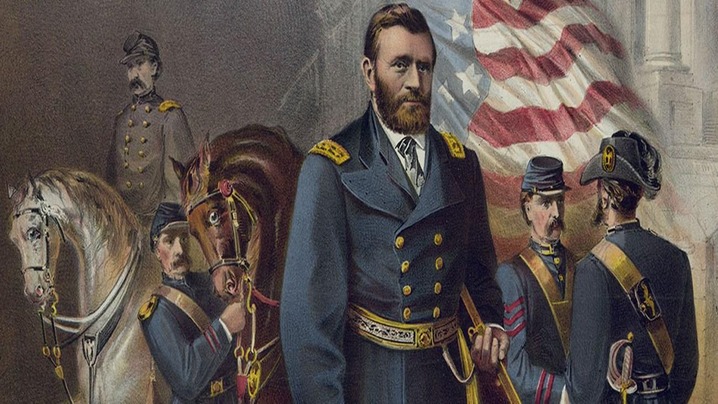
Ranking American Civil War generals as heroes reduces a vast conflict to personality and tactics. The war began after slaveholding states seceded following Abraham Lincoln’s election, and its outcome destroyed legal slavery in the United States. Military leaders must therefore be judged within the political causes, human costs, and emancipation struggle that gave their campaigns meaning. These five generals were consequential, but fame is not the same as moral approval or flawless command.
Grant rose through victories in the western theater, including Fort Donelson, Vicksburg, and Chattanooga. His Vicksburg campaign combined maneuver, river operations, logistics, and repeated adaptation to isolate a major Confederate stronghold. In 1864 he became general-in-chief and coordinated pressure across multiple theaters, limiting the Confederacy’s ability to shift forces.
Grant’s strategy accepted severe losses in pursuit of destroying Confederate armies and their capacity to continue the war. Describing him only as a butcher ignores both the scale of the task and casualties imposed on his opponent, but serious history does not minimize the suffering. At Appomattox, Grant offered terms intended to speed surrender and reduce further fighting. He later served as president and used federal power against the Ku Klux Klan, although Reconstruction’s achievements remained incomplete.
Lee commanded the Army of Northern Virginia and won important victories despite frequent material disadvantages. His willingness to divide forces and act aggressively created operational surprises, but it also produced costly failures, most famously at Gettysburg. By 1864, he faced Grant in a sustained campaign that the Confederacy could not replace losses from indefinitely.
Lee chose to serve a government founded to preserve slavery. He enslaved people and led an army whose invasions carried free Black people south into bondage. Later reconciliation narratives often detached his military reputation from that cause and portrayed him as opposed to slavery in ways the record does not support. His surrender at Appomattox was historically important, but it does not erase the political project he defended.
Sherman commanded armies in the western theater and captured Atlanta in 1864, a victory that strengthened Northern support for continuing the war. His March to the Sea and subsequent campaign through the Carolinas targeted railroads, supplies, industry, and other resources supporting Confederate armies. The campaigns accelerated the Confederacy’s collapse and helped enslaved people escape, while also inflicting destruction and displacement on civilians.
Sherman’s legacy is deeply contested. His wartime Special Field Orders No. 15 temporarily reserved coastal land for Black settlement, but he was not an advocate of racial equality. His later role in campaigns against Native nations also requires scrutiny.
Jackson became famous through the Shenandoah Valley campaign and his partnership with Lee. Rapid marches, secrecy, and attacks against separated forces made him dangerous, though his operations also featured confused orders and severe strain on troops. Confederate fire accidentally wounded him after Chancellorsville in 1863; he died days later.
Postwar memory elevated Jackson into a symbol of Confederate virtue, often omitting slavery and secession. Evaluating his operational skill should not reproduce that mythology. He owned enslaved people and fought to sustain the Confederacy.
Meade took command of the Army of the Potomac only days before Gettysburg. He managed a defensive battle across a long, pressured line and defeated Lee’s invasion. Critics later faulted him for not destroying the retreating Confederate army, but terrain, casualties, weather, exhausted troops, and uncertainty constrained pursuit.
Meade remained army commander when Grant came east in 1864, creating an unusual command relationship: Grant set broad strategy while traveling with Meade’s army, and Meade handled much operational administration. His lower public profile shows how fame can depend as much on postwar storytelling as on wartime responsibility.
The Civil War was not a board game decided by five men. These commanders mattered because their choices affected armies and communities inside a conflict over Union, slavery, and freedom.
Sources: National Park Service: Grant and Lee; Vicksburg National Military Park; Gettysburg National Military Park; Library of Congress: Civil War Maps.
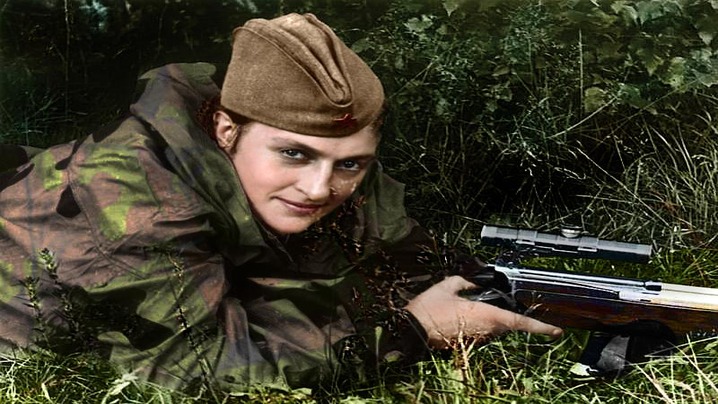
When Germany began its invasion of the Soviet Union, Ukrainian-born Pavlichenko volunteered to join the Red Army.
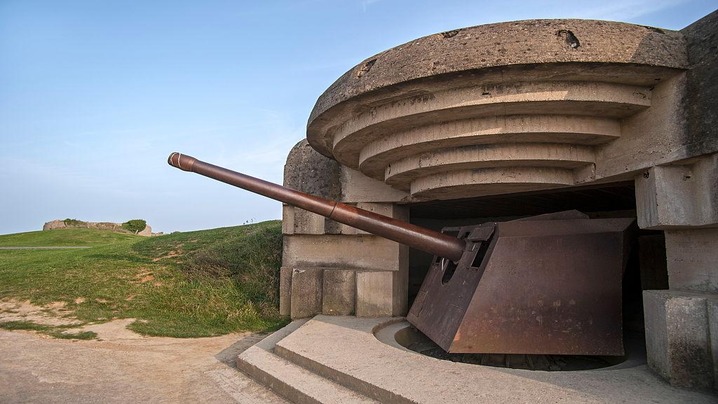
German forces defending Normandy on 6 June 1944 did not rely on a handful of secret superweapons. They used a layered system of obstacles, fortified positions, artillery, automatic weapons, and mobile reserves. Its effectiveness varied sharply by beach because terrain, unit quality, warning time, Allied bombardment, and local command decisions all mattered. The following five systems help explain the defense without turning military technology into spectacle.
Guns in batteries and fortified positions could threaten landing craft, beaches, and approaches inland. They ranged from captured foreign pieces to German naval and field guns. Concrete casemates offered protection but limited a gun’s field of fire; open emplacements were more flexible but more vulnerable. Allied aircraft, naval gunfire, airborne troops, and commandos targeted batteries before and during the landings, with mixed results.
The belt-fed MG 42 had a very high rate of fire and could serve on a bipod or heavier tripod. From prepared positions, machine-gun teams covered beach exits, obstacles, and avenues of approach. The weapon’s reputation should not obscure the human system around it: crews needed ammunition, spare barrels, observation, and mutually supporting positions. On Omaha Beach, intact strongpoints and commanding terrain made automatic fire especially dangerous.
Mortars allowed defenders to fire explosive rounds from cover onto troops they could not see directly. Pre-registered targets and observers could make them effective against crowded beaches, draws, and assembly points. Mortars were portable compared with large artillery, but their value depended on communications and ammunition supply. Once Allied troops penetrated positions or disrupted observers, coordinated fire became harder.
German antitank weapons included several calibers and models, among them the powerful 8.8-centimeter gun in some roles and the more widely distributed 7.5-centimeter Pak 40. Their purpose was to stop tanks, landing vehicles, and other armor along likely routes. Concealment and crossfire could compensate for limited numbers. Allied armor outcomes differed by sector: many American amphibious tanks intended for Omaha were lost offshore, while specialized British vehicles supported other beaches.
The Panzerfaust was a disposable, recoilless antitank weapon designed for short-range use. It became particularly important in the close terrain beyond the beaches, where hedgerows restricted sight lines and enabled ambushes. German infantry also used mines, grenades, rifles, and demolition charges. These simpler tools were often more available than armored vehicles and could be dangerous when combined with prepared terrain.
The phrase “Atlantic Wall” suggests one continuous fortress. In practice, the defenses were incomplete and uneven. Beach obstacles, mines, wire, strongpoints, and inland positions formed local systems rather than an impenetrable line. Some sectors were held by static divisions with limited transport; others received stronger formations. German commanders also disagreed over where the invasion would land and how close armored reserves should be kept to the coast.
Allied forces had overwhelming advantages in naval power, air power, engineering, logistics, and the ability to land follow-on troops. Deception operations also helped keep German attention on the Pas-de-Calais. Success was not automatic: Omaha demonstrated how terrain and unsuppressed defenses could produce severe losses. Yet by nightfall, Allied troops held lodgments on all five invasion beaches.
D-Day is best understood as a contest between complex organizations under extreme uncertainty. German weapons shaped the fighting, but they did not overcome Allied scale, adaptation, and persistence.
Sources: U.S. Army Center of Military History; Imperial War Museums; National WWII Museum; D-Day Overlord historical reference.
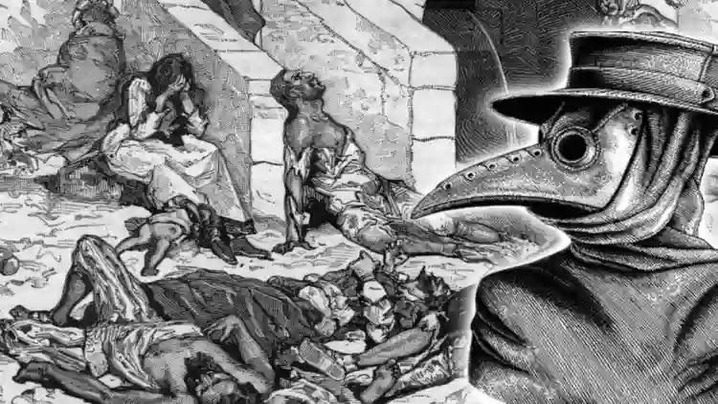
The Black Plague killed almost 60% of the population in Europe at the time as it gives other implications to the world in terms of its economy and social system.
Top-Top Info Worldwide is a popular online newsportal and going source for technical and digital content for its influential audience around the globe.