





Top-Top Info Worldwide is a popular online newsportal and going source for technical and digital content for its influential audience around the globe.

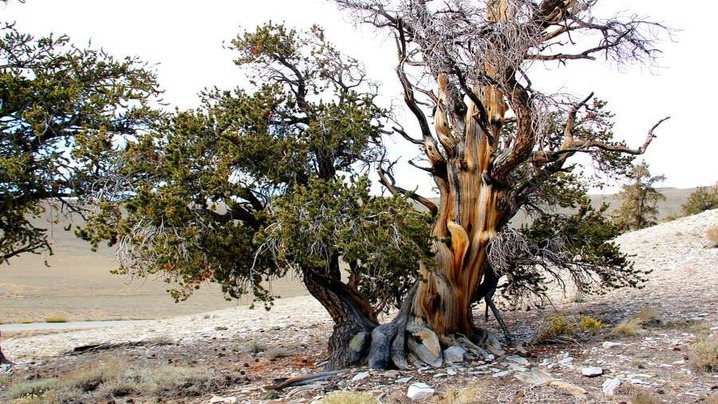
Methuselah, the oldest known non-clonal tree in the world, is located in the White Mountains of California. Discovered by Dr. Edmund Schulman in the 1950s, this bristlecone pine tree is believed to have germinated around 2833 BC from a seed.
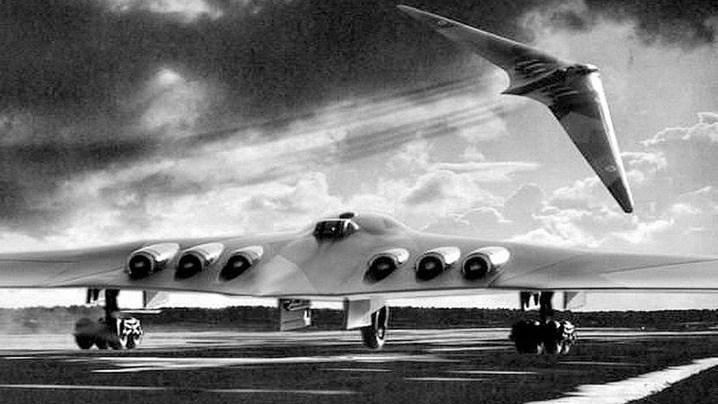
Nazi propaganda promoted Wunderwaffen—miracle weapons that supposedly could reverse Germany's defeat. Later popular culture repeated the claim, often admiring futuristic designs without asking whether they were reliable, strategically useful or produced through criminal exploitation. Some German systems were technically important, but innovation is not the same as effectiveness. They arrived amid shortages, bombing, collapsing logistics and decisions that diverted resources from proven equipment.
Advanced programs compete for engineers, factories, fuel and scarce materials. A weapon that performs impressively in a test can fail as a system if crews cannot train, spare parts do not arrive or production tolerances collapse. Germany's late-war projects suffered all of these problems. Allied forces also adapted through radar, jamming, interception tactics, bombing and capture of launch sites.
The postwar influence of German research is real but morally complicated. The United States and Soviet Union took hardware and specialists into their missile programs. That transfer must be discussed alongside the forced labor and civilian attacks embedded in the technology's wartime development. Calling the machines super weapons reproduces propaganda; studying their tradeoffs reveals more about engineering and dictatorship.
The central lesson is not that Germany nearly won with secret technology. It is that spectacular prototypes could not overcome strategic defeat—and that technical achievement pursued without human rights can carry an appalling cost.
Sources: Smithsonian: Myth of German wonder weapons; Smithsonian: V-2 object history; NASA: Wernher von Braun and the V-2; U.S. Holocaust Memorial Museum: Dora-Mittelbau.
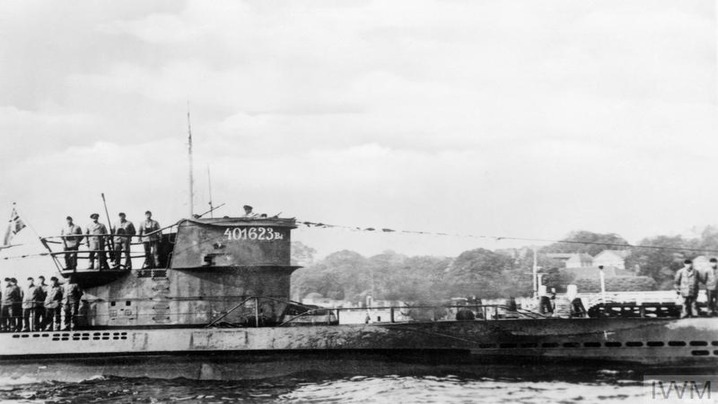
World War II submarines operated in different oceans, under different doctrines, against different targets. Tonnage claims were revised after the war, and celebrated patrols came with the deaths of merchant mariners, naval crews, prisoners, and submariners. Ranking boats from “worst” to “best” erases those differences. These five cases are useful because each illuminates a distinct part of the undersea conflict: commerce war, intelligence capture, technical risk, special operations, and submarine-versus-submarine combat.
The American submarine USS Wahoo became known for successful patrols under Dudley “Mush” Morton and for the later achievements of executive officer Richard O’Kane. Its history also includes persistent torpedo failures early in the war and a controversial attack on survivors of the transport Buyo Maru, an episode that resists heroic simplification.
Wahoo entered the Sea of Japan in 1943 and was lost with all 79 aboard while attempting to leave through La Perouse Strait. Japanese records and later investigation indicate an air and surface attack on 11 October. The boat shows how tactical innovation, faulty weapons, intelligence limits, and extreme risk converged in the Pacific campaign.
Commanded by O’Kane, USS Tang completed five war patrols and received two Presidential Unit Citations. On its final patrol in October 1944, the submarine attacked a convoy in the Formosa Strait. Its last torpedo made a circular run and struck the firing submarine.
Most of the crew died; nine men, including O’Kane, survived and became prisoners of war. Tang is often cited through disputed or historically adjusted sinking totals, but its deeper significance is clearer: even an experienced crew operating an effective boat could be destroyed by the unreliability and danger of its own weapons.
On 4 June 1944, a U.S. Navy hunter-killer group centered on USS Guadalcanal forced the German Type IXC submarine U-505 to the surface off West Africa. A boarding party entered while the abandoned boat was flooding and prevented it from sinking. The Allies recovered code material, equipment, and the vessel itself, while keeping the capture secret to protect intelligence advantages.
The operation demonstrates that antisubmarine warfare relied on aircraft, escort ships, signals intelligence, training, and rapid damage control—not simply a duel between captains. Preserved in Chicago, U-505 also offers unusual material evidence of conditions inside a German long-range submarine.
Under Eugene Fluckey, USS Barb conducted aggressive Pacific patrols, including operations along the coast of China. The submarine used deck guns and later carried rockets for attacks on shore targets. In one mission, crew members went ashore to place an explosive charge on a railway line—an unusual extension of submarine operations onto land.
Barb illustrates adaptability, but “innovation” should not become a synonym for spectacle. Its effectiveness depended on intelligence, crew training, maintenance, and calculated exposure to shallow or mined waters.
In February 1945, the British submarine HMS Venturer, commanded by James Launders, encountered German U-864 off Norway. Both boats were submerged. Using hydrophone information, periscope observations, plotting, and prediction of the target’s changing course, Venturer fired a spread of torpedoes. U-864 attempted evasive action but was hit and lost with everyone aboard.
The engagement is widely noted as the only confirmed case in which one submerged submarine sank another submerged submarine in combat. It foreshadowed the three-dimensional tracking problem that would become central in postwar antisubmarine warfare.
These submarines are historically important not because they can be arranged into a universal league table, but because together they show the changing tactics, intelligence, technology, and moral complexity of undersea war.
Sources: U.S. Naval History and Heritage Command: Wahoo; NHHC: Tang; Griffin Museum of Science and Industry: U-505; National WWII Museum: USS Barb; Royal Navy: Venturer and U-864.
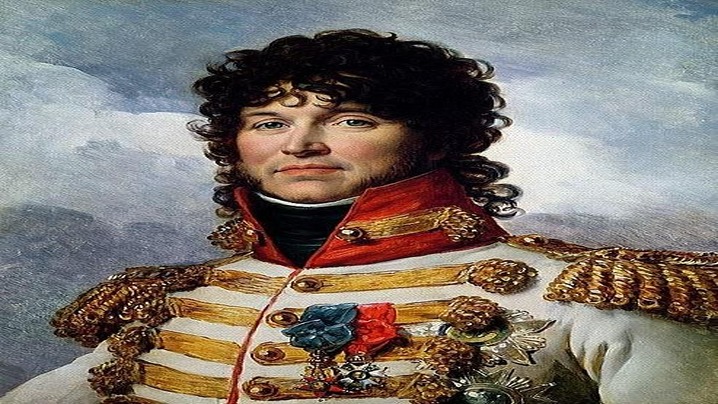
Calling Joachim Murat Napoleon’s “top knight” is colorful but imprecise. He was not a medieval knight, and there is no objective table that ranks the emperor’s commanders. He was, however, one of the most conspicuous cavalry leaders of the Revolutionary and Napoleonic era. His reputation rested on personal courage, an ability to inspire mounted troops, and a theatrical public image that made him seem built for the battlefield.
Murat entered military service before the French Revolution transformed promotion in the army. His rise accelerated after he assisted Napoleon Bonaparte during the royalist uprising in Paris in October 1795. He then served in Italy and Egypt, becoming a general of division after the battle of Aboukir in 1799. In 1800 he married Caroline Bonaparte, Napoleon’s sister, tying his career to the ruling family as well as to the army.
Cavalry had several jobs in Napoleonic warfare: screening an army’s movements, scouting, pursuing a retreating enemy, protecting infantry, and delivering concentrated attacks at decisive moments. Murat excelled at the last two. He was physically brave and visually unmistakable, often wearing elaborate uniforms. That appearance was not merely vanity. In an age when orders traveled through aides, flags, and trumpets, a commander who could be recognized instantly had practical value.
His best-known service came during campaigns such as Austerlitz, Jena, Eylau, and the invasion of Russia. At Eylau in 1807, a massive French cavalry attack helped stabilize a dangerous situation for Napoleon’s army. At Borodino in 1812, Murat again operated amid extremely heavy fighting. These episodes explain his legend, but cavalry charges were collective actions involving thousands of soldiers, supporting artillery, disciplined formations, and enormous risks. They should not be reduced to one glamorous rider.
Murat’s battlefield nerve did not make him equally strong in strategy or politics. Napoleon valued his aggression but also regarded him as impulsive. Murat’s record in Spain is inseparable from the violent repression surrounding the Madrid uprising of May 1808. Later that year Napoleon made him king of Naples, where he attempted to govern, reform institutions, and preserve his own dynasty.
That crown exposed a conflict between loyalty and self-preservation. As Napoleon’s empire weakened, Murat negotiated with Austria in an effort to keep Naples. In 1815 he reversed course and tried to rally Italians against Austrian power, but his forces were defeated at Tolentino. After an unsuccessful attempt to regain his kingdom, he was captured and executed at Pizzo in October 1815.
Murat deserves attention as a gifted cavalry commander and a symbol of the social mobility opened by the Revolution. Yet “best” depends on the criterion. Louis-Nicolas Davout had a stronger reputation for disciplined operational command; Jean Lannes was admired as a battlefield leader; and André Masséna had a longer record of independent command. Murat’s special strength was mounted action at the point of crisis.
His story is most useful when stripped of hero worship. It shows how charisma can amplify military leadership, how family ties can accelerate political advancement, and how tactical bravery does not guarantee sound strategic judgment. The brilliant uniforms remain memorable, but the complete Murat was soldier, royal relative, monarch, opportunist, and ultimately a casualty of the political order he helped create.
Sources: Fondation Napoléon biography; Fondation Napoléon career chronology; Fondation Napoléon on Murat’s equestrian portrait.
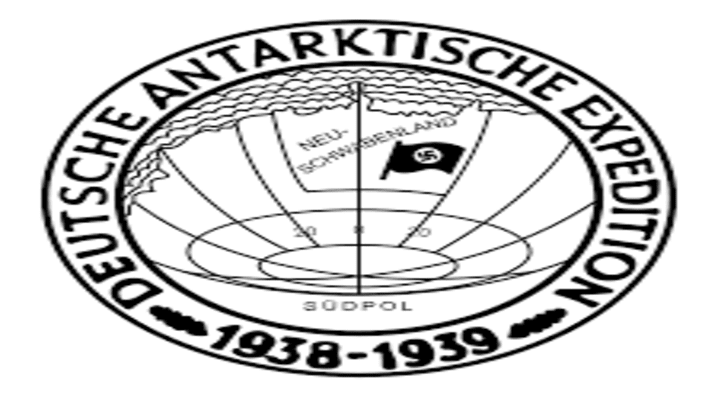
The German Antarctic Expedition of 1938–39 was a real voyage with scientific results, economic aims, and an unmistakable place in Nazi expansion policy. It was not evidence of a hidden wartime civilization beneath the ice. Separating the documented expedition from later conspiracy stories reveals a more instructive history: industrial demand for whale oil, territorial competition, new aerial-survey methods, and science operating under a dictatorship.
Germany imported large quantities of fats and oils, including whale oil used in products such as margarine and industrial lubricants. The Nazi Four Year Plan sought greater economic self-sufficiency and preparation for war. German officials were interested in securing access to Southern Ocean whaling grounds and in identifying a possible base area. The Alfred Wegener Institute’s history of German polar research describes the expedition as politically driven and connected to raw-material independence and territorial ambition.
The expedition sailed from Hamburg in December 1938 aboard Schwabenland, a cargo ship operated by Lufthansa and adapted to launch flying boats by catapult. Captain Alfred Ritscher led the expedition. Its personnel included aviators, ship crew, scientists, technicians, and photographers. The ship reached the coast of Dronning Maud Land in January 1939 and worked there during the Antarctic summer before returning to Germany in April.
Two Dornier Wal flying boats, Boreas and Passat, conducted survey flights from the ship. Their cameras produced thousands of oblique aerial photographs over a broad area. Crews dropped marker darts bearing swastikas, a symbolic act associated with the intended German claim. The expedition named the surveyed region Neuschwabenland, or New Swabia. Later cartographers and scientists used parts of the photographic record, although cloud, navigation limits, and the oblique images complicated precise mapping.
The voyage gathered geographic, meteorological, and other observations, and its reports became part of the record of Antarctic exploration. Those results should not be detached from sponsorship. The expedition served a regime pursuing autarky, rearmament, and territorial prestige. Norway proclaimed sovereignty over Dronning Maud Land in January 1939, during the German voyage, and competing national interests shaped activity in the region. The outbreak of World War II prevented planned follow-up expeditions.
Germany did not establish a permanent Antarctic station or an effective administration in the surveyed territory. After the war, the international governance of Antarctica changed substantially. The Antarctic Treaty, signed in 1959 and entering into force in 1961, reserved the continent for peaceful purposes and scientific cooperation while setting aside disputes over territorial claims. Modern place names in Dronning Maud Land reflect exploration by several countries rather than a surviving Nazi jurisdiction.
Later stories claimed that Germany built a hidden base, that U-boats carried senior Nazis there, or that postwar Allied operations attacked it. A peer-reviewed analysis in Polar Record compared those claims with ship movements, ice conditions, geography, and documented military operations. It found no evidence for a secret wartime German base. Operation Highjump, the large U.S. Navy Antarctic expedition of 1946–47, had training and research purposes; it was not a battle against an underground installation.
The expedition deserves attention without embellishment. Its aircraft expanded knowledge of an incompletely mapped coast, while its political goals demonstrate how exploration can serve economic and imperial projects. The best evidence survives in expedition reports, archival collections, photographs, and later scholarly analysis—not in stories that treat the absence of evidence as proof of secrecy.
Sources: Alfred Ritscher’s expedition report at AWI; AWI history of German polar research; 1940 Polar Record expedition summary; Polar Record analysis of the base myth; Antarctic Treaty Secretariat.
Top-Top Info Worldwide is a popular online newsportal and going source for technical and digital content for its influential audience around the globe.